Press releaseResearch, Scientific and Technical Culture
October 24, 2022
What is the purpose of snow? If we prevent it from accumulating on the ground, what will be the consequences? Will plants and soil organisms be colder? Will they lack water and nutrients?
In the context of global warming, which is particularly pronounced in the Alps, this is an important question...
What is a cryotron? What is it used for?
You might think it's the name of a species of dinosaur recently discovered in Lautaret, but no... that's not it!
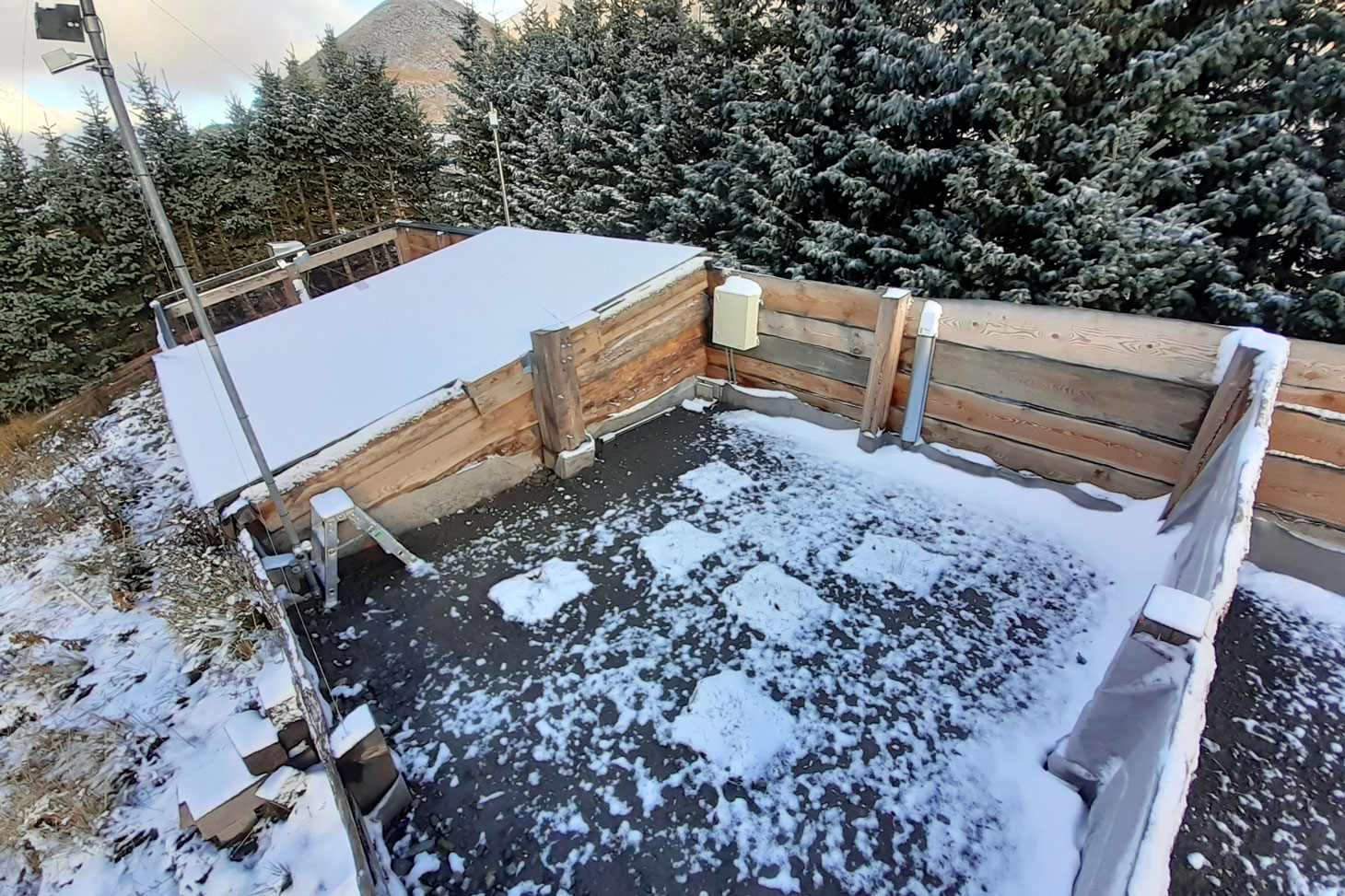
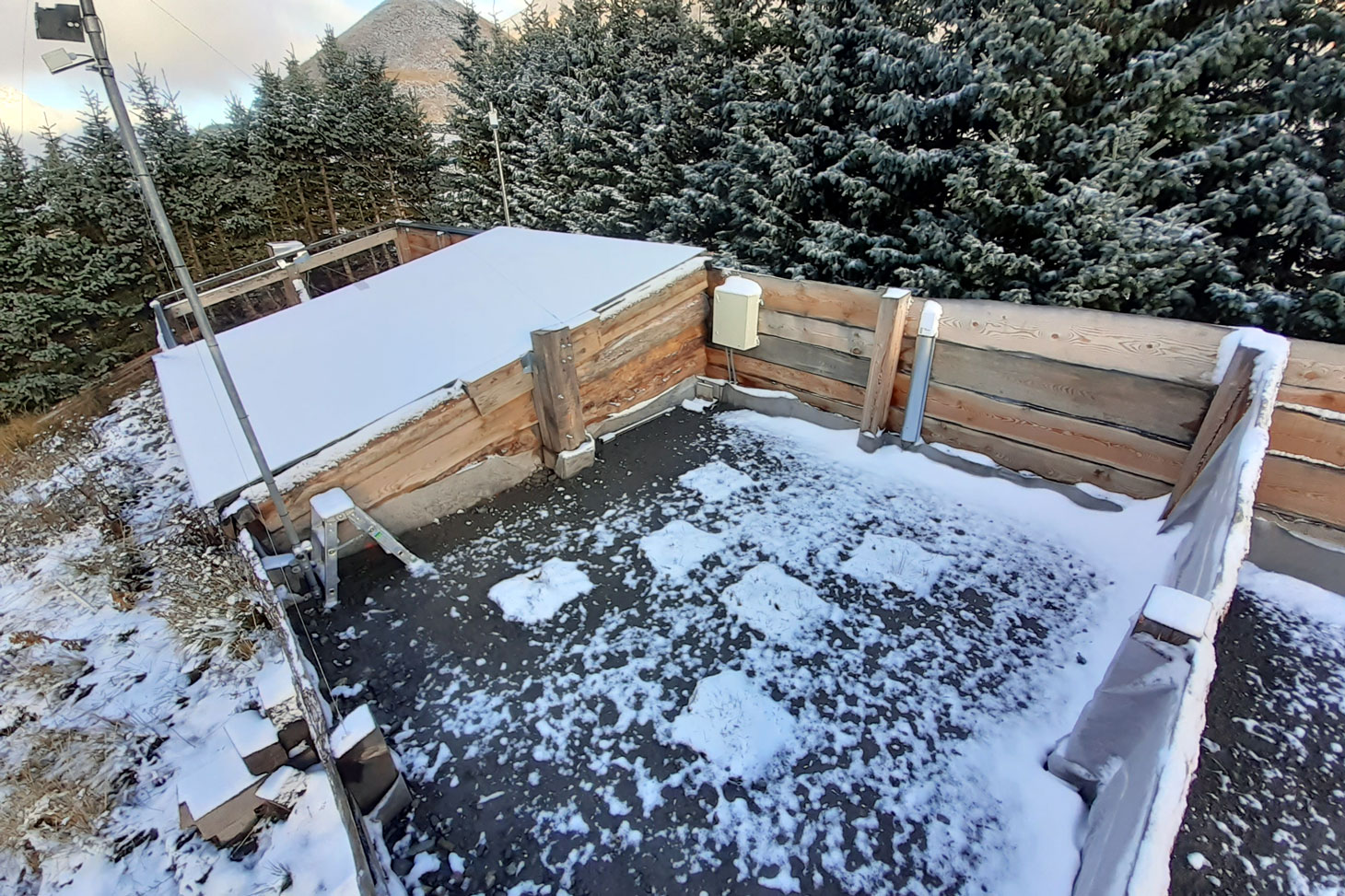
The cryotron is the latest experimental device at the Lautaret garden. It is a prototype created at the request of researchers to simulate and study the consequences of snowless winters in the mountains. Our research support team is proud to announce the deployment of this tool, built with funding from AnaEE France and technical assistance from Ardae, a Grenoble-based company specializing in scientific instrumentation.
High-altitude environments are experiencing the effects of global warming in a very amplified way. These environments are normally covered by snow for a good half of the year. This snow cover plays an essential and structuring role for alpine ecosystems. It insulates them from the freezing temperatures of winter by keeping the ground temperature around 0°C. But with global warming, snowless winters are becoming more common, depriving ecosystems of their protection against low temperatures. The alternating periods of intense freezing and thawing that the soil in the Alps is subjected to will likely disrupt plant and microbial communities, which are not adapted to sub-zero temperatures. The cryotron makes it possible to anticipate and study the effects of reduced snowfall in the mountains.
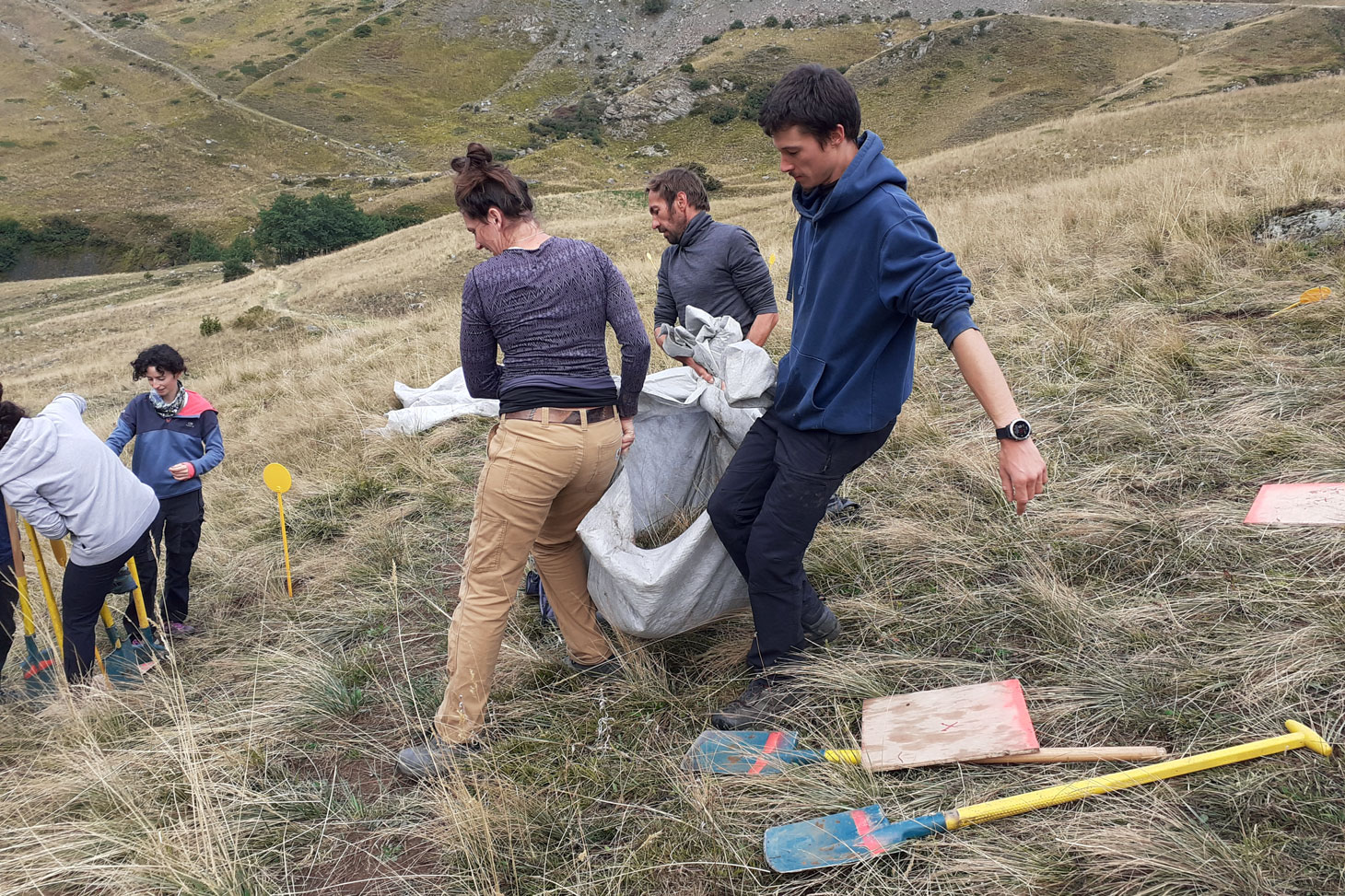
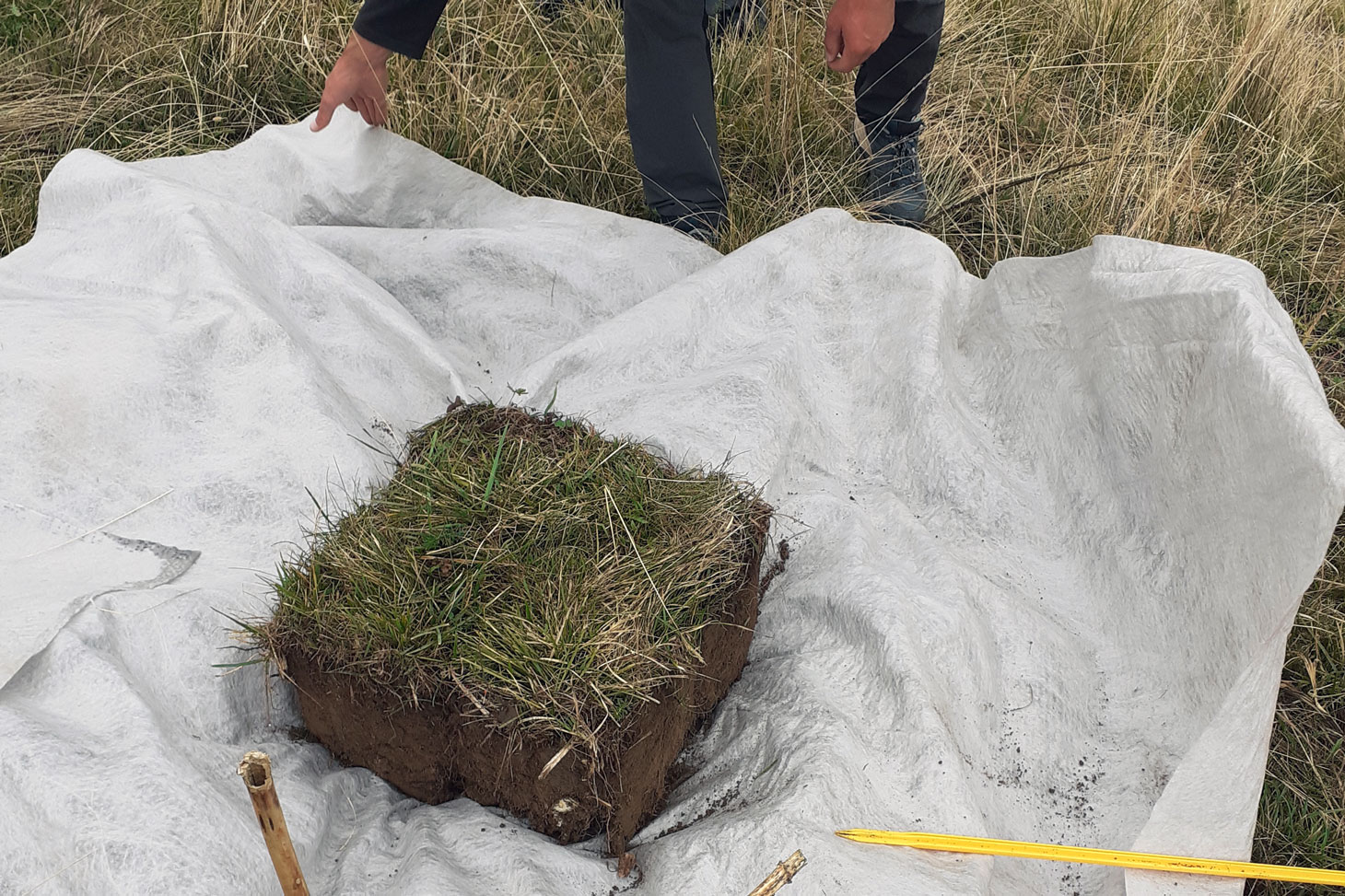
Construction of the cryotron began in spring 2021, led by Pascal Salze, assistant engineer at the Lautaret garden. Researchers Jérôme Poulenard from the Edytem laboratory (USMB, CNRS), Jean Christophe Clément from the Carrtel laboratory (USMB/INRAE), Philippe Choler from the LECA laboratory (UGA/CNRS/USMB) and Nicolas Bonfanti, their doctoral student (USMB), established the study protocols. The experiment is called Colder soils in a warmer world (Colder soils in a warming world). It involves taking 18 squares of alpine soil at an altitude of 2,000 meters, in "monoliths" measuring 40x40 cm by 30 cm deep, and transplanting them at the same altitude in the cryotron in the Lautaret garden. The cryotron is divided into three 16m² plots.2Six alpine pasture squares were transplanted into each of these plots. The first is equipped with a retractable roof, which closes automatically when sensors detect rain and a temperature below 1.5°C. It is therefore under a "controlled atmosphere." It is a plot where it does not snow. The other two plots are open to the sky. The 12 alpine pasture squares located there will be subject to natural hazards. They are the "controls" of the experiment, which will enable comparative analyses to be carried out.
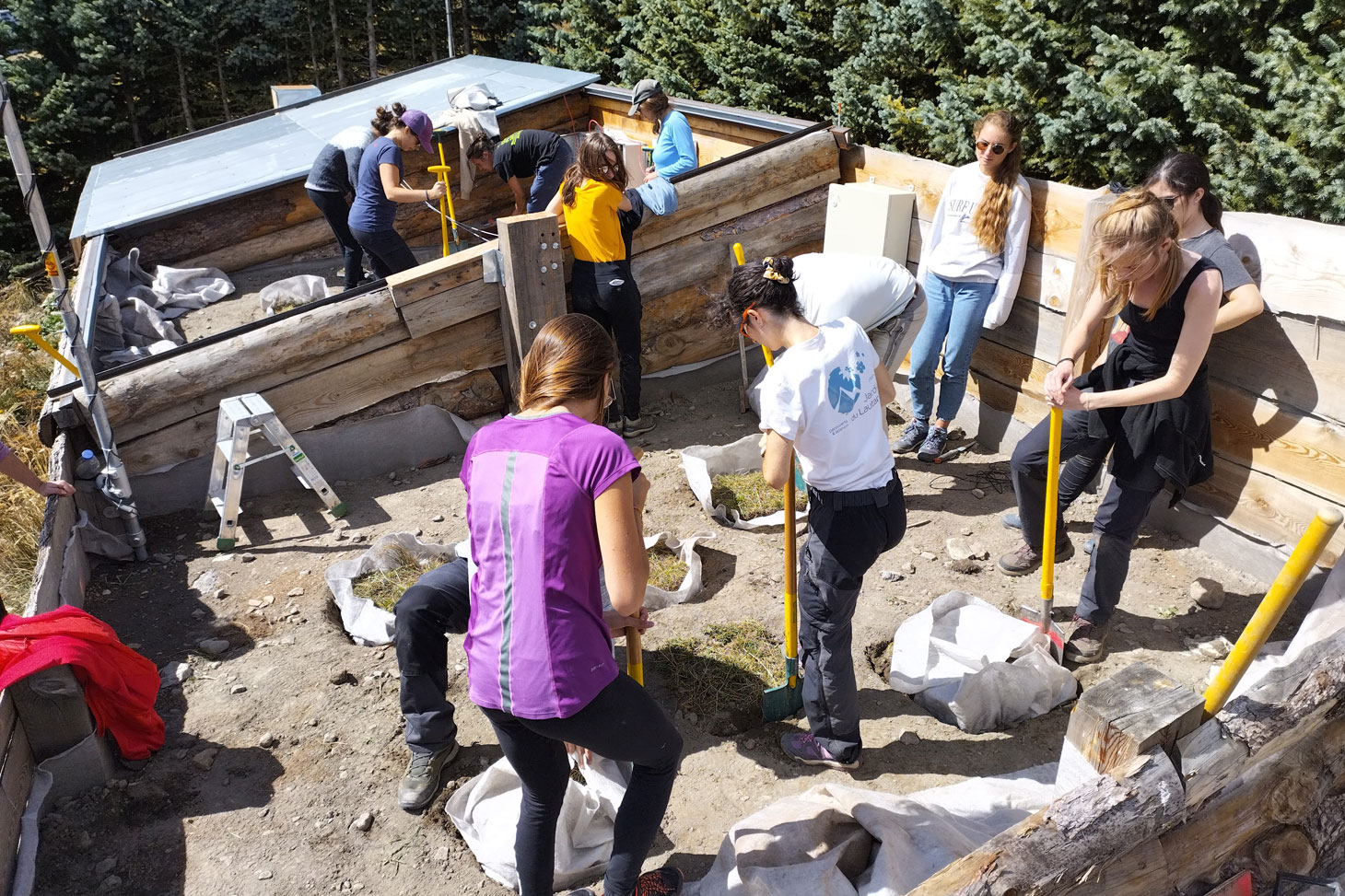
Payments for alpine pasture plots by students enrolled in the Dynamo and Écomont master's programs, with assistance from the Lautaret garden team.
Zoom in on one of the alpine pasture squares taken as a monolith.
The alpine pasture disbursements and transplants took place in September 2022, during a training course bringing together master's students in ecology from the Universities of Savoie Mont-Blanc and Grenoble Alpes who are pursuing careers in research. The trainees also installed numerous sensors, with the support of the garden team. Some of these students will participate in the various surveys and laboratory analyses. This experimental platform will enable Nicolas Bonfanti to study how biogeochemical cycles (carbon, nitrogen, and phosphorus) are impacted by the lack of winter snowfall. During 2023, the mineralization rates (activity of soil microorganisms) and primary productivity (plant growth) of the various alpine pasture plots will be analyzed. He will then be able to compare the results between those that have not been covered by snow during the winter, thanks to the cryotron's removable roof, and those that will be covered by snow, as in a "normal" year.
Transplanting alpine squares into the three cryotron plots.
The retractable roof of the cryotron, in the closed position.
In the context of global warming, it is crucial to understand and observe how plants adapt, the composition of the soil that supports the root system, and the various mineral and organic exchanges that take place. Alpine grasslands are home to a wide variety of biodiversity and are essential to pastoralism. They play an important role in the flow of carbon, nitrogen, and other chemical elements.
Published on October 10, 2022
Updated on February 24, 2023
The Cryotron
The construction of the cryotron was funded by the French national research infrastructure AnaEE France (Analyses et Expérimentations pour les Écosystèmes terrestres) and carried out by the research team at the Lautaret Garden (CNRS/UGA), with technical supportfrom Ardae.
The students from the Dynamo and Écomont Master's programs spent a week at the Jardin du Lautaret. This is an opportunity for these young people to discover natural areas, learn about the practical aspects of scientific research, take samples, map, study botany and soil science, use differential GPS and ground-penetrating radar, work in a laboratory, and more. It is an important step in their training and their understanding of the world of research.
Share the linkCopyCopiedClose modal windowShare this page's URLI recommend this page:Available at this address:The page will then be accessible from your "My Favorites" menu.Stop the videoPlay the videoMutePlay soundChat: Any questions?Chatbot Robo FabricaMatomo traffic statisticsX (formerly Twitter)

 Discovery and science