 Discovery and science
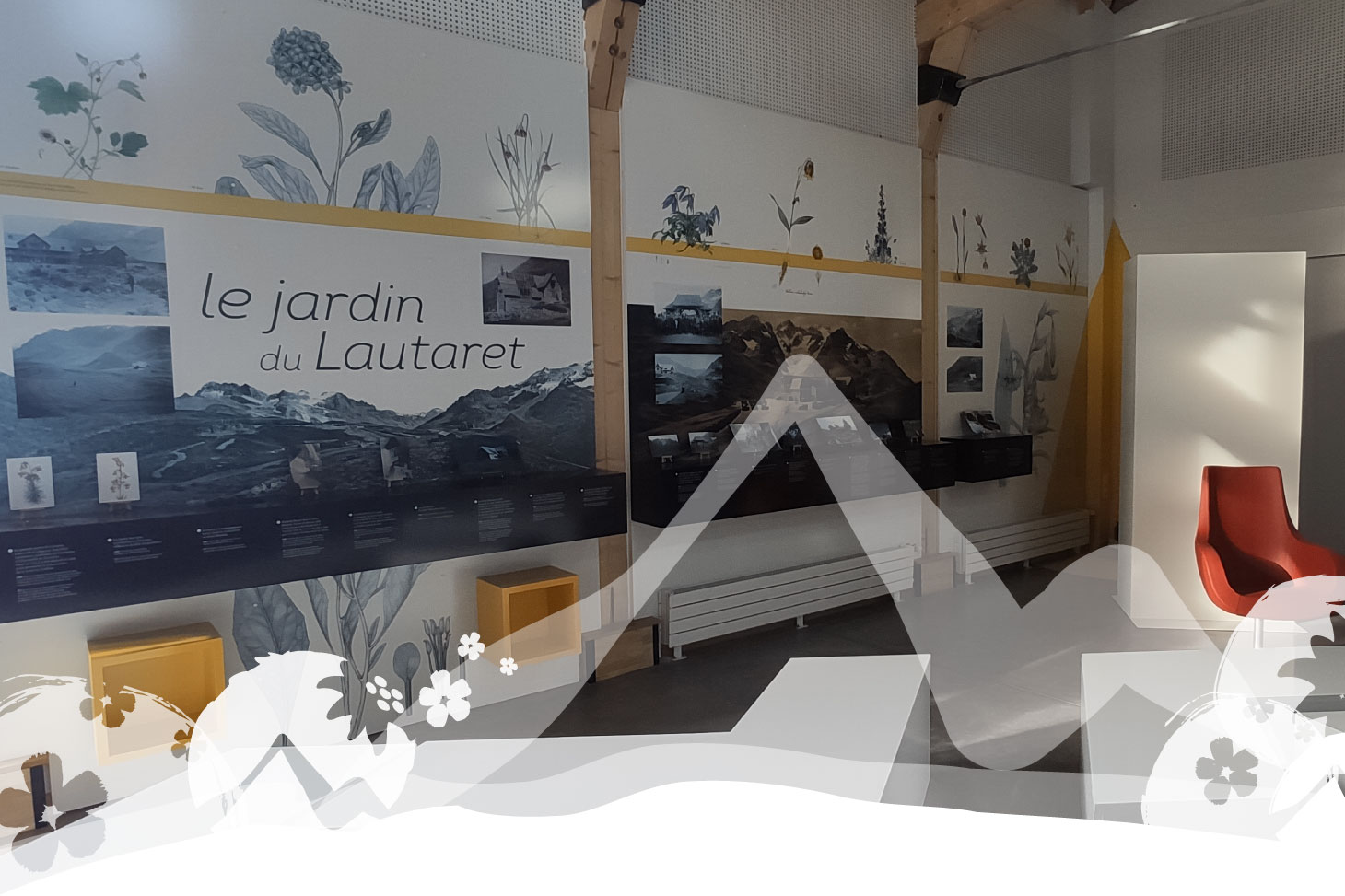
The jardin du Lautaret a mecca for science. Learn about its history in this museum space and by following the "discovery and science" signs scattered throughout the garden. You will learn all there is to know about the scientific experiments conducted at Lautaret on biodiversity, glacier evolution, the greening of the Alps, climate change and changing practices, and the impact on different mountain ecosystems!
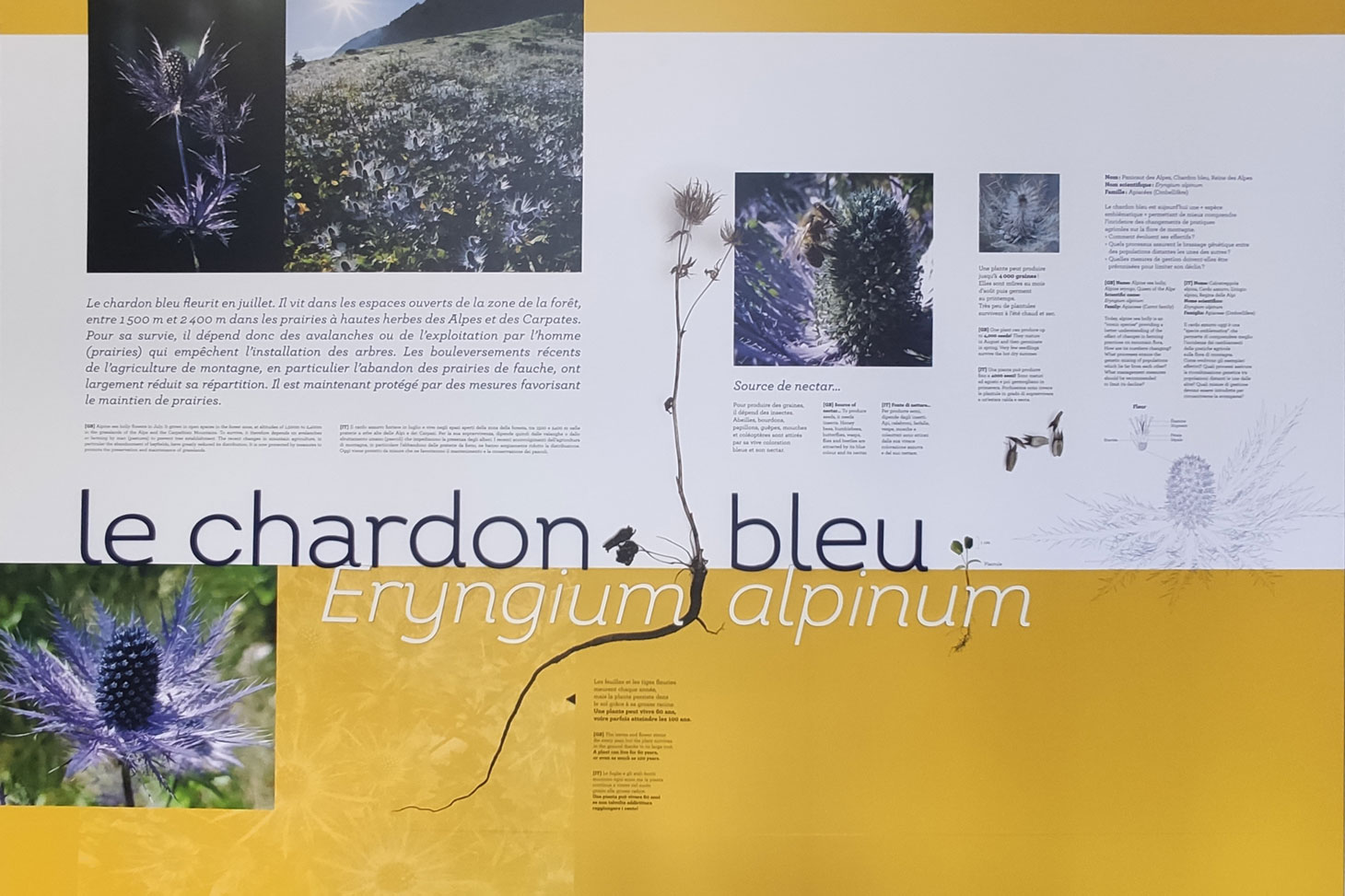
The blue thistle is now an emblematic species of the Alps, providing insight into the impact of changes in agricultural practices on mountain flora. How are its numbers changing? What processes ensure genetic mixing between distant populations? What management measures should be recommended to limit its decline?
The blue thistle blooms in July. It grows in open areas of the forest zone, between 1,500 m and 2,400 m in the tall grass meadows of the Alps and Carpathians. Its survival therefore depends on avalanches or human intervention to prevent trees from growing. Recent changes in mountain agriculture, particularly the abandonment of hay meadows, have greatly reduced its distribution. The blue thistle is now protected by measures to promote the maintenance and upkeep of meadows.
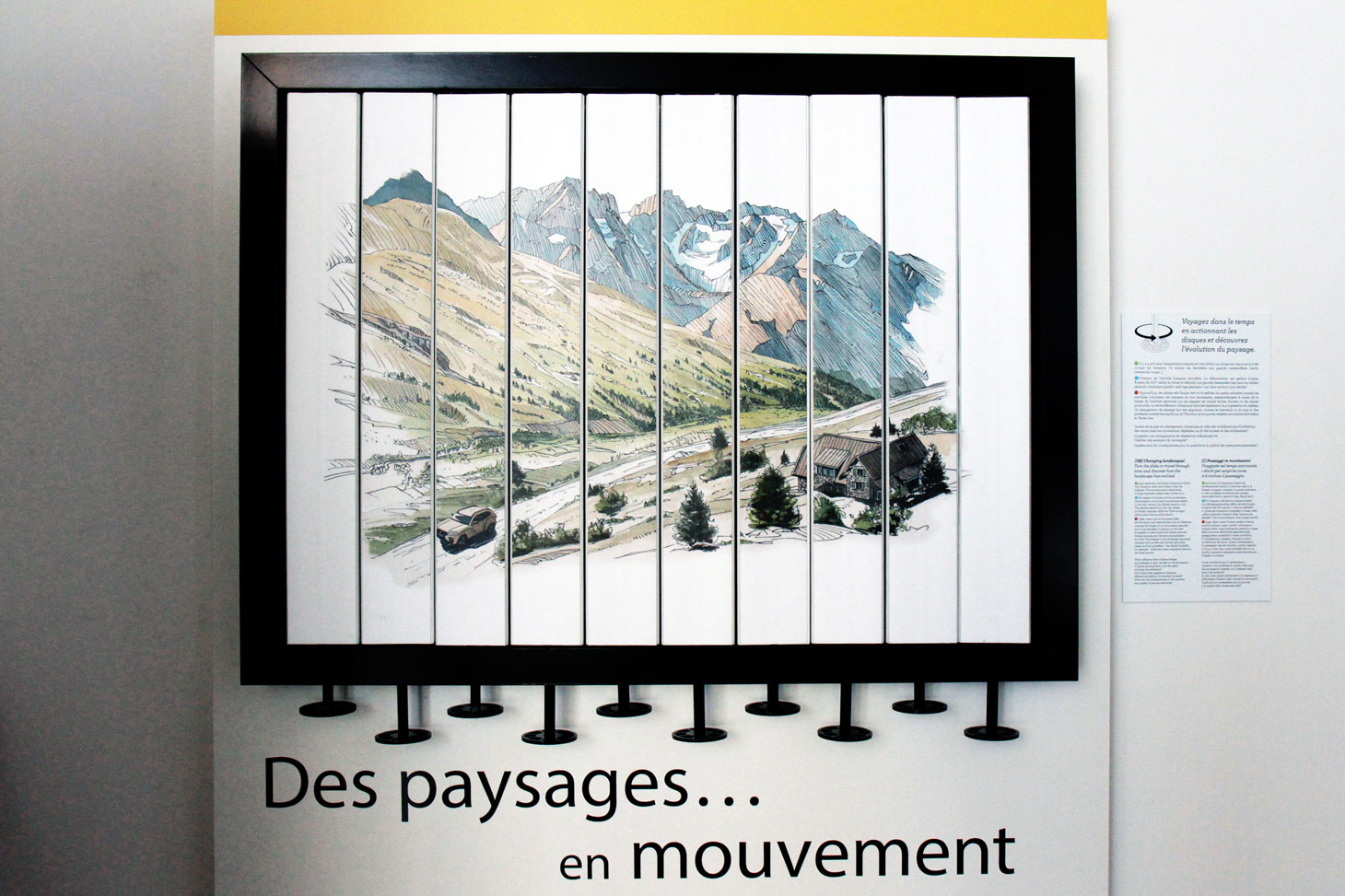
What role do climate change and land use changes play in vegetation succession over the years and millennia? How do these changes in vegetation influence the habitat of mountain animals? What are the consequences for the quantity and quality of pastoral resources?
Trees such as green alder and small shrubs such as blueberries are colonizing the slopes of our mountains, mainly due to the decline in pastoral activity on the least accessible or least productive mountain pastures. Global warming is also promoting the spread of larch trees. This change in landscape has winners, such as deer and wolves, and losers, such as the Apollo butterfly, while mixed vegetation favors black grouse.
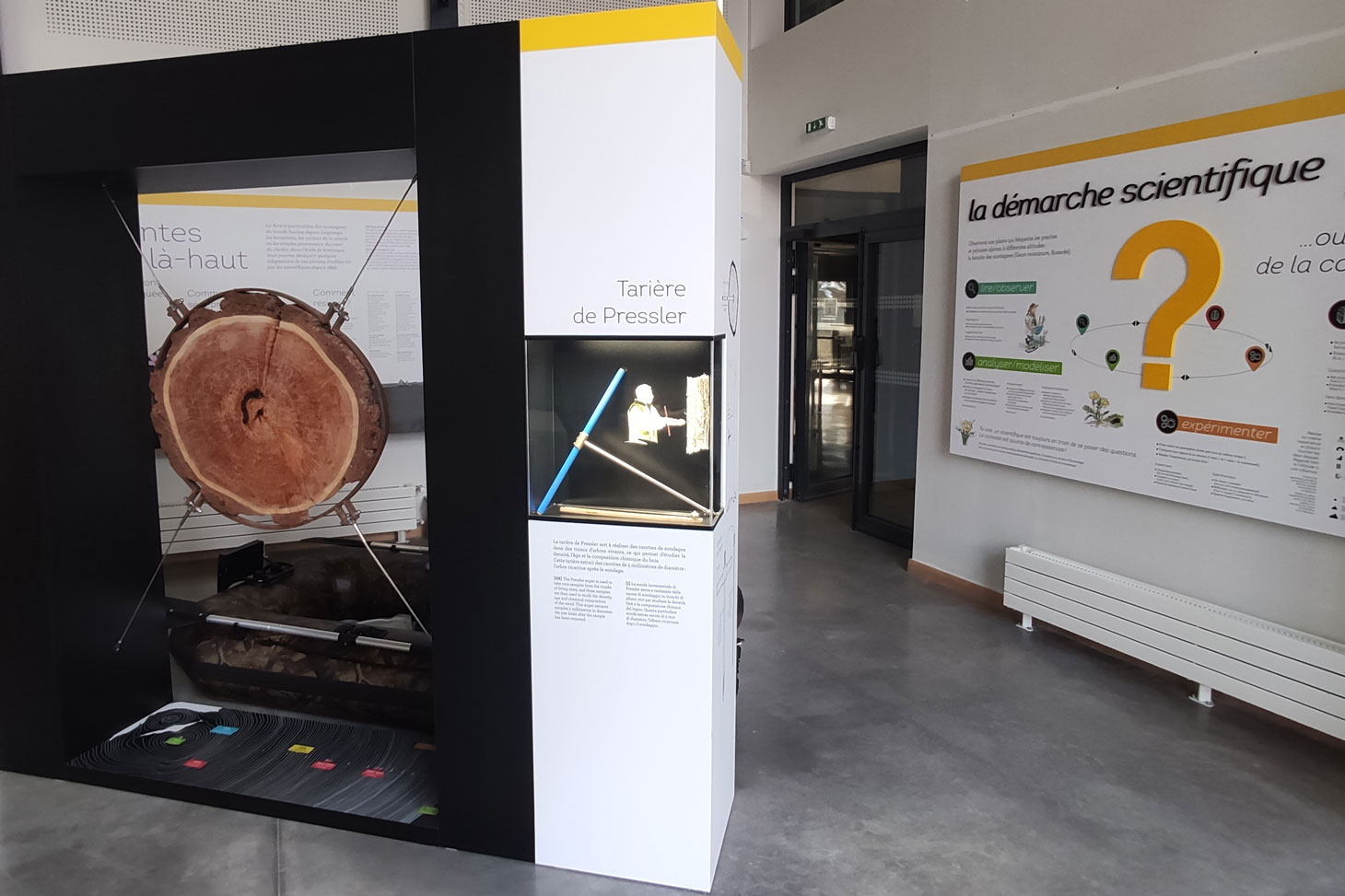
Through its biology and architecture, the tree is a true marker of time. Each year, the tree grows and its diameter increases. Its width varies depending on the species, the individual trees, their age, their exposure, and the vagaries of the climate.
Pressler's auger is used to extract cores from living tree trunks in order to study the density, age, and chemical composition of the wood. This auger extracts cores 5 millimeters in diameter and leaves a scar on the tree after drilling.