What comes to mind when you hear the words "sugar" and "snow"? Whipping egg whites, powdered sugar, snow sugar... Science gives a nod to baking! Let's take a closer look at sugar, or more specifically, the sugars found in real snow. How did they get there and how do they transform? This is the subject of Francesca Schivalocchi's thesis.
Microbial ecology and biogeochemistry of snow
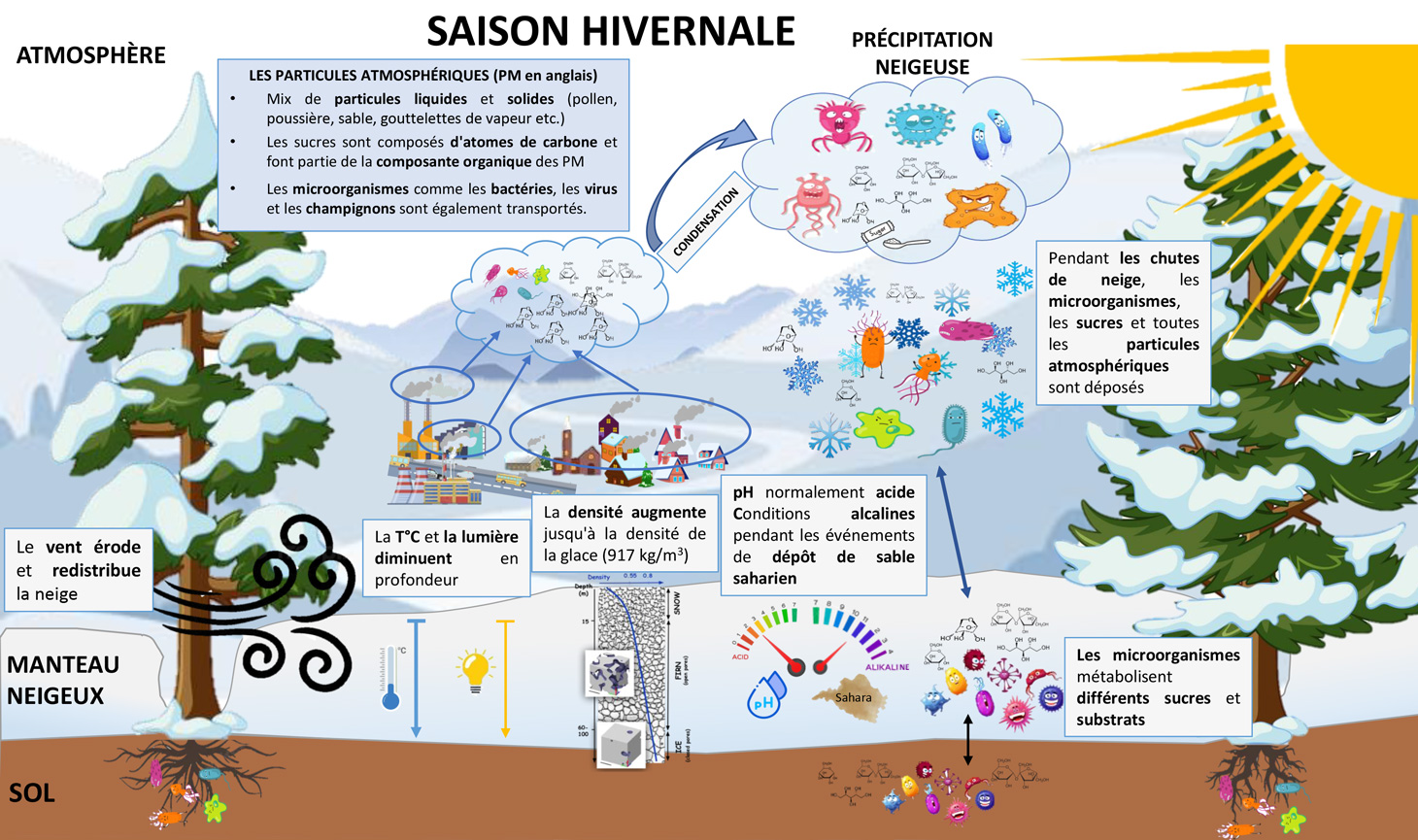
Mountain ecosystems are particularly sensitive to the accumulation of atmospheric particles (PM). These can be defined as a mixture of liquid or solid particles. For example: a mixture of pollen, dust, sand, vapor droplets, bacteria, viruses, fungi, etc. The best-known atmospheric particles are PM10 and PM2.5, due to their negative effects on our lungs.
Atmospheric particles are composed mainly of organic matter. It has been established that a long list of sugars can be measured in this matter. These sugars have different origins:
- Arabitol and mannitolarecontained in the spores emitted by fungi for reproduction. These two sugars are therefore found in the atmosphere due to the action of the wind.
- Bacteria, viruses, pollen, and fragments of leaves and plantsarecomposed of simple sugars such asglucoseand sucrose. They are also carried by wind and atmospheric currents, sometimes very far (for example, during episodes of sand deposition from the Sahara Desert).
- Levoglucosan, galactosan, and mannosanaresugars derived from thecombustionof woodandwood products. This means that their concentration increases particularly in winter, when large quantities of wood and wood pellets are burned for heating.
Atmospheric particles, which contain sugars and microorganisms, circulate in the air and end up in precipitation, including snow.
In winter in the mountains, different layers of snow pile up and form the snowpack. Every time it snows, atmospheric particles also accumulate in this snowpack. It is therefore assumed that the microorganisms deposited consume the organic substances around them in order to produce the energy necessary for their life cycle.
In fact, microorganisms in snow need to eat, just like us humans. And like us, it seems that they prefer sugars. This is because they are quick to metabolize and provide immediate energy.
During the winter season, accumulated snow can undergo changes in its physical and chemical characteristics, such as temperature, pH, and the amount of light and sugars it receives from the atmosphere. It is assumed that this also affects microorganisms, as some are better adapted to lower temperatures and more basic or acidic pH levels. There are also bacteria and microalgae capable of chlorophyll photosynthesis that can be found in the snowpack.
©Francesca Schivalocchi
Why study microorganisms in snow?
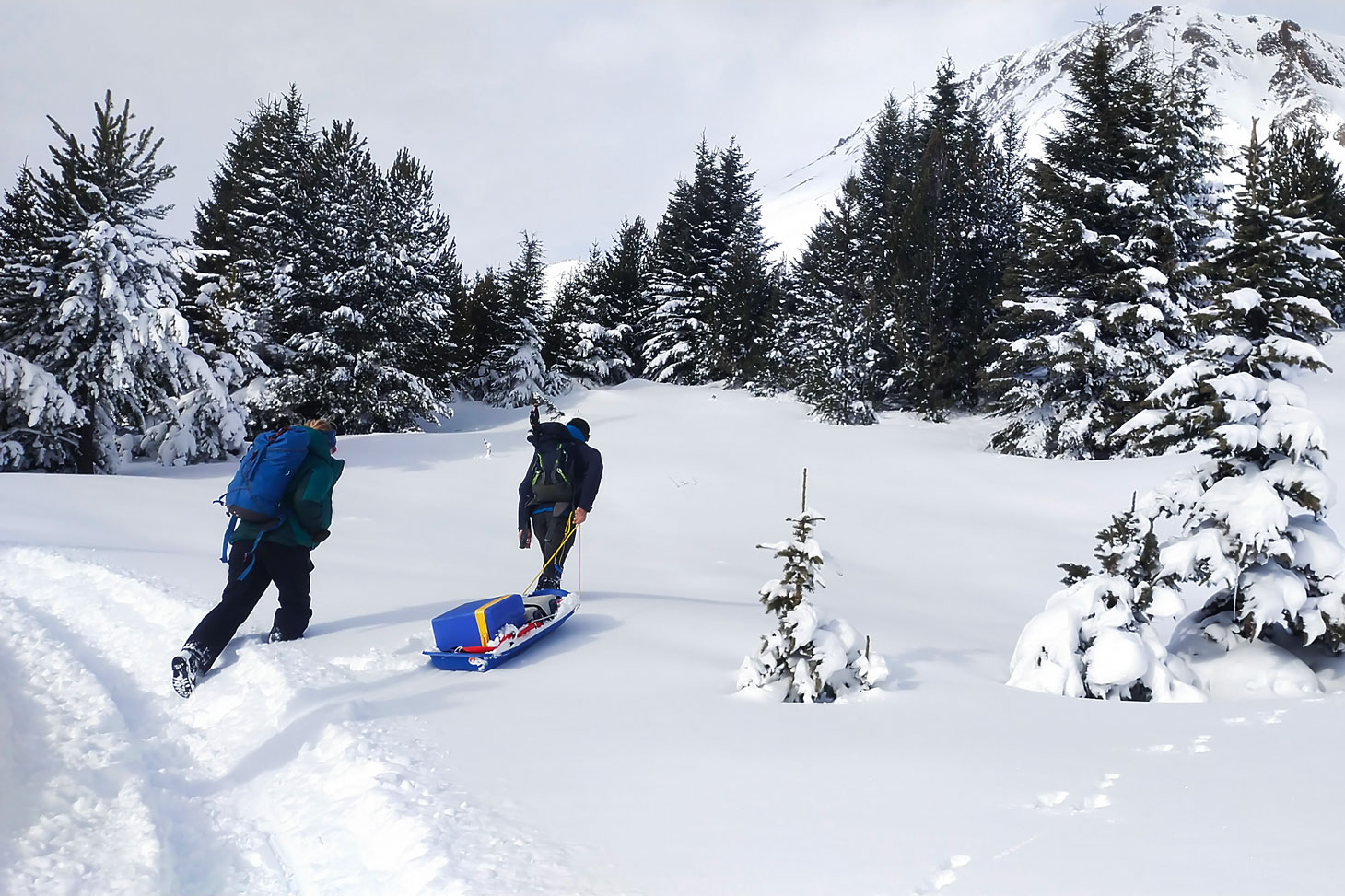
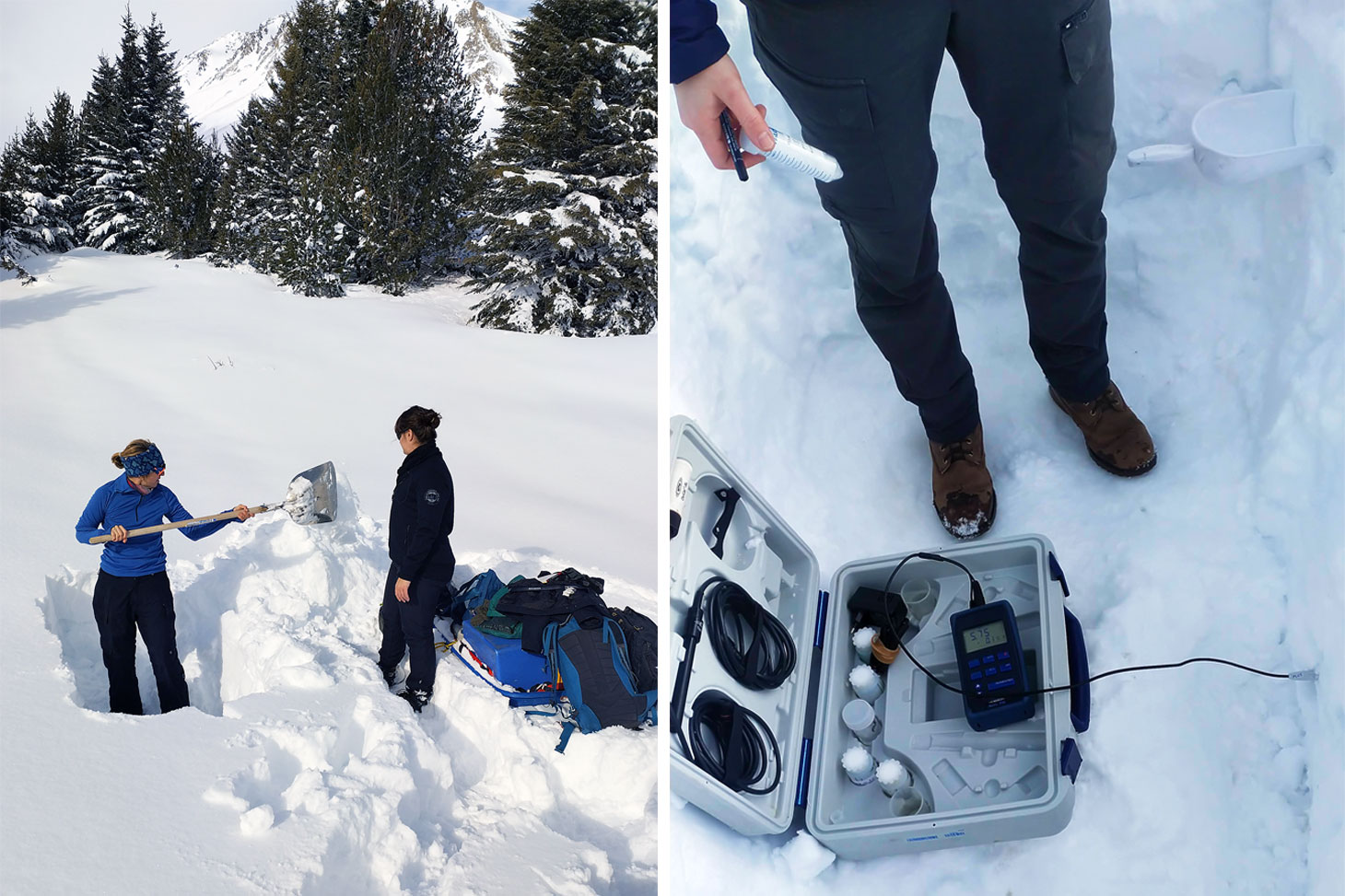
Catherine Larose, Francesca Schivalocchi, and Mathieu Pin, photographed by Christine Piot, during their visit to the Lautaret garden as part of the ABS research project.
Microorganisms (bacteria, fungi, viruses, microalgae) have always been underestimated, but they perform essential functions in all existing ecosystems. Because microorganisms are very small, they can easily be transported anywhere. These organisms are extremely diverse in terms of metabolism and adaptability.
In a context of global change, the disappearance of snow habitats could cause a significant decline in the microorganisms present, reducing their biodiversity. Several studies have shown that some microorganisms have the ability to break down potentially dangerous substances. We can therefore assume that without the mitigating effect of snow cover and microbial degradation, many substances present in the atmosphere could be dispersed directly into water systems.
The ABS (Atmospheric Biogenic Sugars) project receives logistical support from the Lautaret garden.
Here are the five hypotheses that will be tested over the next three years., by doctoral student Francesca Shivalocchi:
- Microorganisms play an important role in snowy habitats.
- Their activity enables the degradation of various substances, such as sugars (S), sugar alcohols (SA), and anhydro sugars (AS), as well as other substances transported by atmospheric particles into the snowpack through precipitation.
- By breaking down sugars, microorganisms can alter their concentration within snow, thereby changing its atmospheric signature.
- There is a difference between the different layers of the snowpack, from the snow surface to the "older" base, in terms of sugar and microbiological composition.
- Microbial communities can evolve during the winter season (December to April). This is due to changes in temperature, daylight hours, precipitation, transport of substances, etc.
On the research agenda:
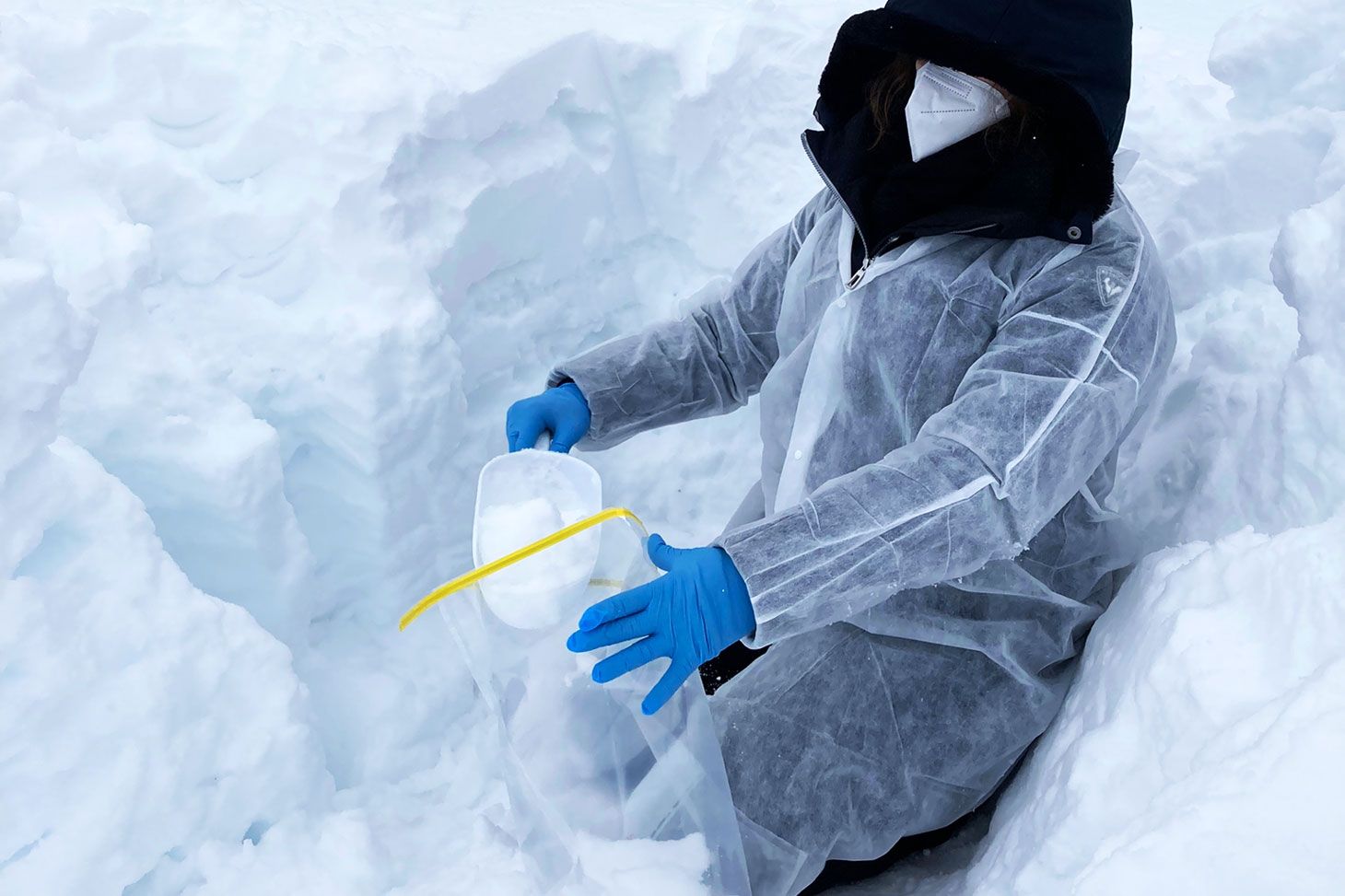
- Conduct several sampling campaigns throughout the 2023 winter season to monitor the deposits and evolution of S, SA, AS, and microorganisms.
- Quantify S/SA and AS fluxes between the atmosphere and snow deposits
- Determine the impact of microbial metabolic activities in snow cover on the transformation and production of S, SA, and AS.
- Incubation of snow collected in the field to determine microbially mediated S/SA/AS transformations.
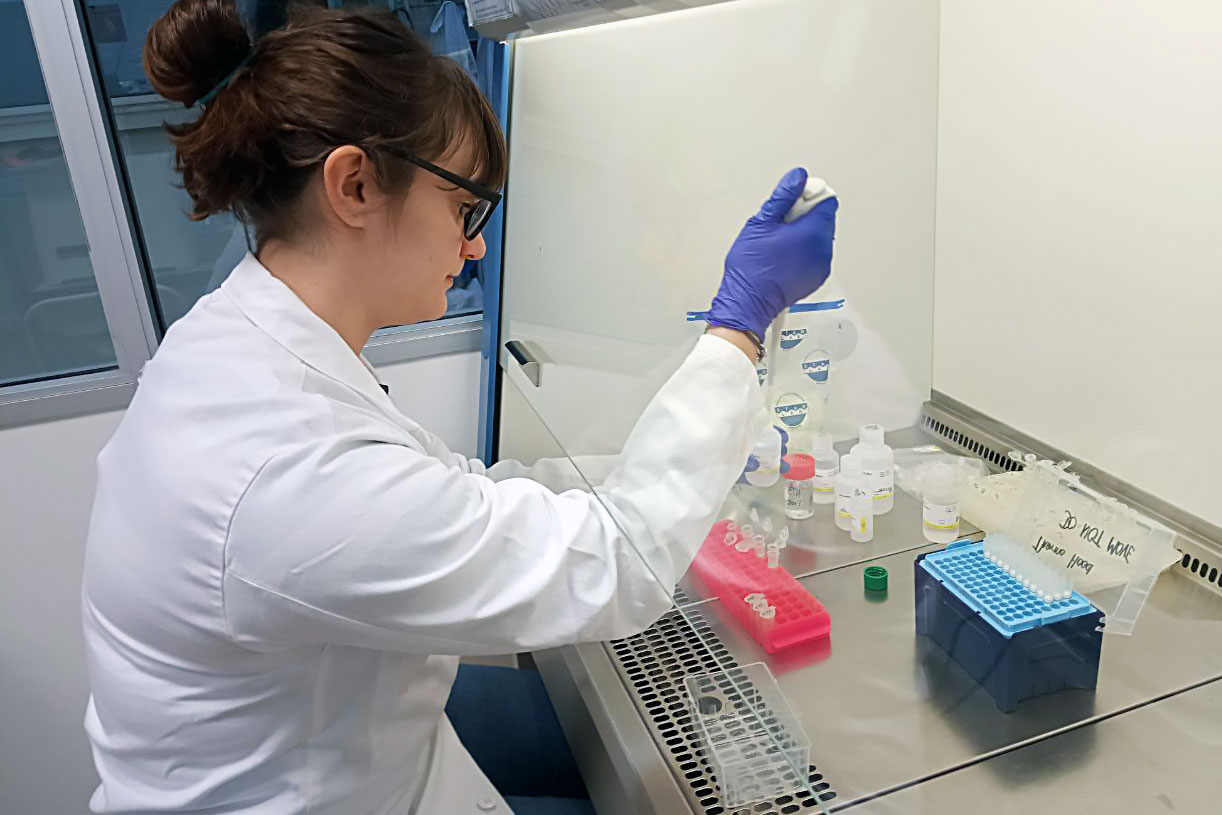
Francesca Schivalocchi studied environmental sciences at university, with a particular focus on cold environments. She is currently working on a thesis for two research laboratories. The Environments, Dynamics, and Mountain Territories Laboratory (Edytem), a research unit of the University of Savoie Mont Blanc (USMB) and the CNRS, and the Ampère Laboratory, a research unit of the École Centrale de Lyon (ECL) and the CNRS.

 Discovery and science

 Publications