 Discovery and science
These particles travel at speeds between 300 and 500 km/s, sometimes exceeding 1,000 km/s during strong eruptions. It takes them between two and three days to reach Earth. Upon arrival, they "encounter" the Earth's magnetic field and follow a complex path that brings them to an oval centered around the Earth's magnetic poles, slightly offset from the geographic poles. This oval varies in size depending on solar activity. There is one in the north and another in the south. The northern oval, which is the most commonly observed, usually passes over northern Scandinavia, Iceland, the middle of Greenland, and northern Canada. On the Russian side, it is offset due to the inclination of the magnetic field and passes instead over the Arctic Ocean. On February 26 and 27, 2023, the particle flow reached Earth and we began to observe its effects. The oval expanded and the auroras intensified. The southern border of the northern oval descended to the latitudes of England and the Canada-US border.
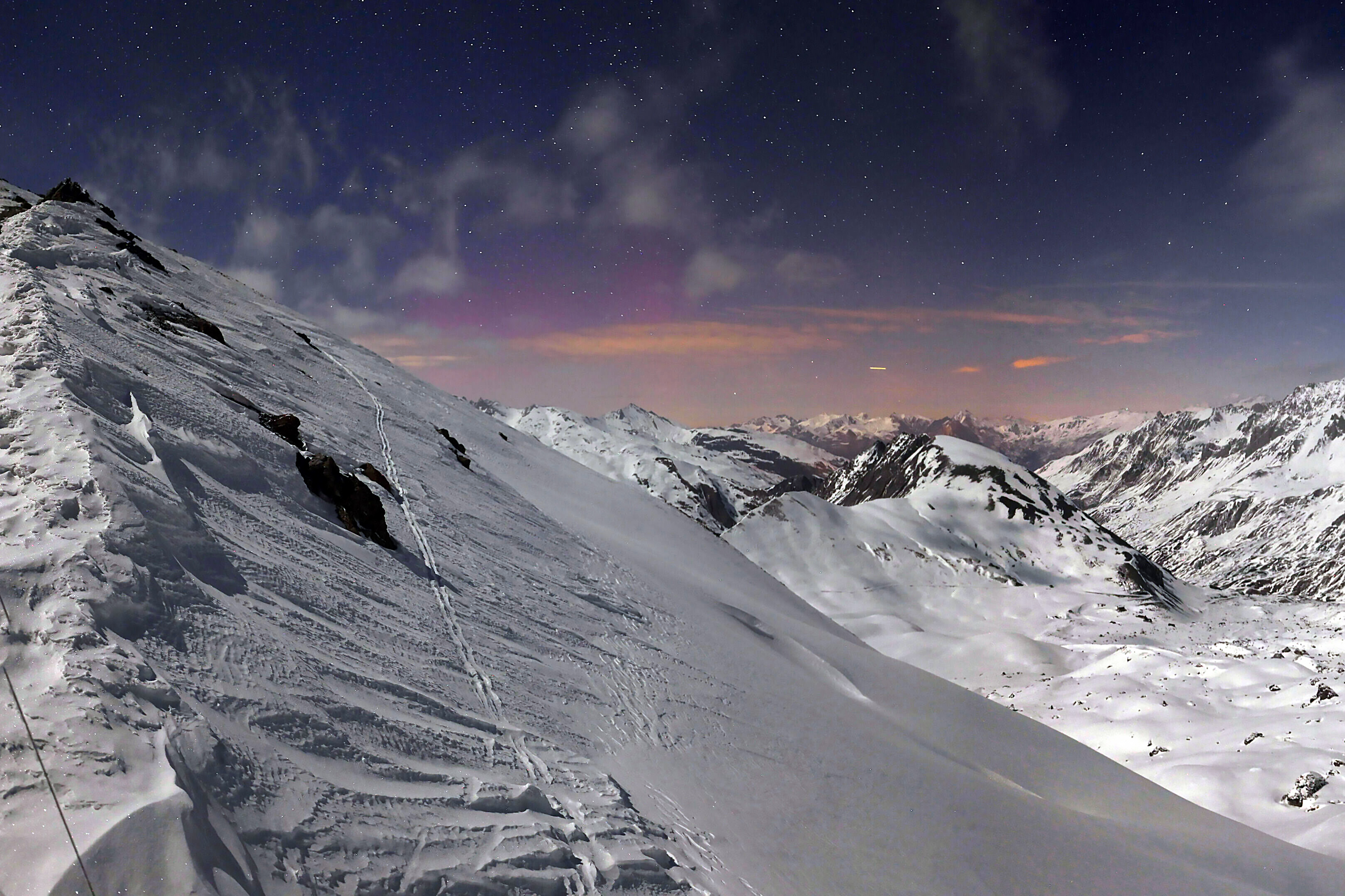
In fact, they occur at very high altitudes, between 100 km for the green color and 220 km for the red color. A quick geometry calculation shows that the aurora seen at Galibier was actually above Sheffield in England, about 1,000 km from our mountains. This is why we only saw red, emitted at a higher altitude.
Even stronger events are possible. In 1859, a very strong series of solar flares occurred and aurora borealis were observed in Cuba and India. It is important to study them because these particles, in addition to producing magnificent lights, can disrupt our technologies, electrical networks, satellites, GNSS (global navigation satellite systems), communications, etc.
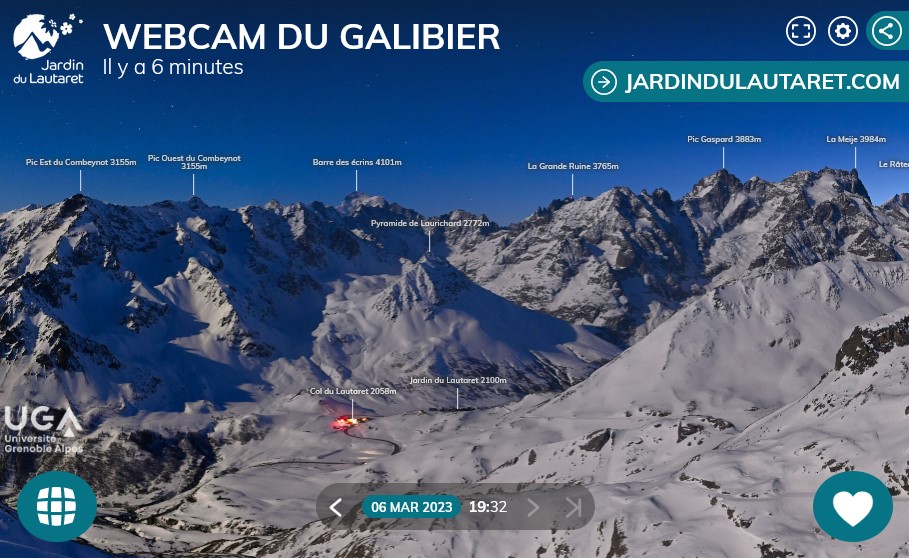
The Northern Lights can be seen in France approximately once every ten years. Webcams, such as those installed byUniversité Grenoble Alpes, The jardin du Lautaret Valloire Tourisme at Galibier, can become valuable tools for scientific analysis in the field of space meteorology.
The answer in this Flash video by OSUG: