
Restoring mountain slopes: wild seeds or commercial seeds?
ConferenceCommercialization, Research, Scientific and Technical Culture
August 3, 2026Villar-d'Arène - Lautaret Garden
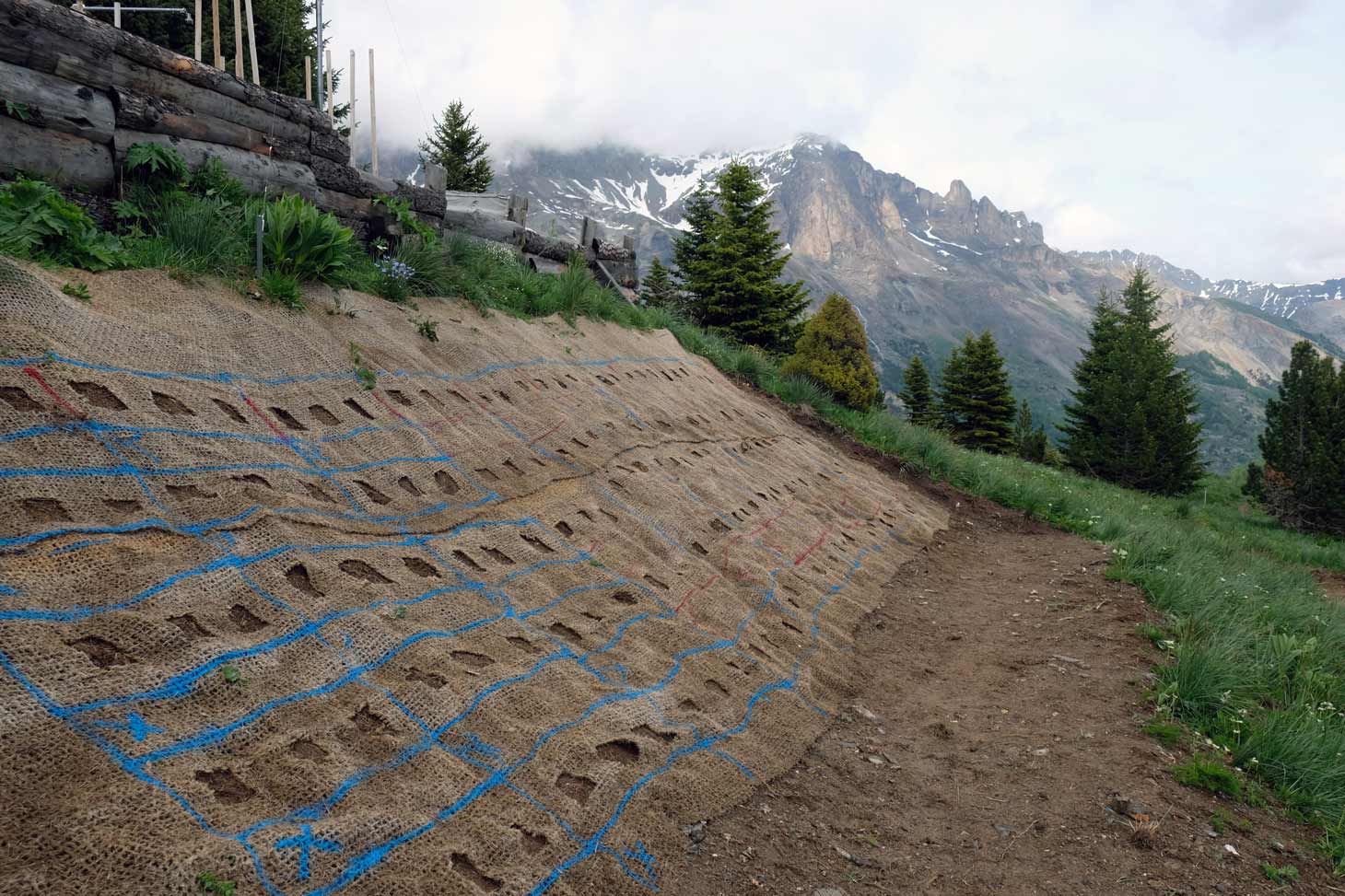
From 5:00 p.m. to 6:00 p.m. With Taïna Lemoine, a researcher in the ecology and evolutionary biology of cultivated plants at the Laboratory of Mountain Ecosystems and Societies. The restoration of mountain slopes—ecosystems shaped by human activities, particularly winter tourism—raises the question of plant material selection. The geographic origin and diversity of the introduced plants are key factors for their adaptation, ecosystem resilience, and the sustainability of restoration efforts.
In ski areas, the slopes created during the construction of trails or infrastructure can be revegetated either with native plants from the surrounding meadows or with non-native commercial seed mixtures, sometimes selected from lowland areas or abroad. But what ecological differences does this entail?
Through an experimental approach combining pot trials in Grenoble and field trials at the Lautaret Garden, scientists studied the effect of human selection and lowland cultivation on plants’ ecological strategies and their ability to adapt to a new environment. They assessed functional variability in Alpine Anthyllis used for revegetation, based on a seed provenance gradient ranging from wild to certified commercial sources, on slopes and on flat terrain. In doing so, they tested the hypothesis that selection—whether intentional or unintentional—modifies plant phenotype and plasticity.
This research highlights the importance of rethinking the choice of species and genotypes used for ecological restoration, in order to improve the adaptability of plant species to current and future environmental changes.
Taïna Lemoine is a researcher in the ecology and evolutionary biology of crop plants at the Laboratory of Mountain Ecosystems and Societies (LESSEM - INRAE). With a background in botany, ecology, agronomy, and ethnoecology, she takes an interdisciplinary approach at the intersection of the life sciences and the humanities. Since 2024, she has been involved in the national SOLUBIOD project within the Vivalp living lab, where she contributes to the development of nature-based solutions, with the aim of linking fundamental research and local action.
Published on April 2, 2026
Updated on April 3, 2026
Date
August 3, 2026
from 5:00 p.m. to 6:00 p.m. As part of the "Monday Lectures" Free, no reservation required A social gathering will be held after the conference
Location
Villar-d'Arène - Lautaret Garden Conference Room Visitor Center
Share the linkCopyCopiedClose modal windowShare this page's URLI recommend this page:Available at this address:The page will then be accessible from your "My Favorites" menu.Stop the videoPlay the videoMutePlay soundChat: Any questions?Chatbot Robo FabricaMatomo traffic statisticsX (formerly Twitter)