
August 15, 2010Villar-d'Arène - Jardin du Lautaret
In 2009, in view of the advance of voles in the areas adjacent to the pass and the damage caused by field voles in The jardin du Lautaret the end of winter, a large-scale operation was launched to save the garden and the experimental areas located nearby.
But what are we talking about?
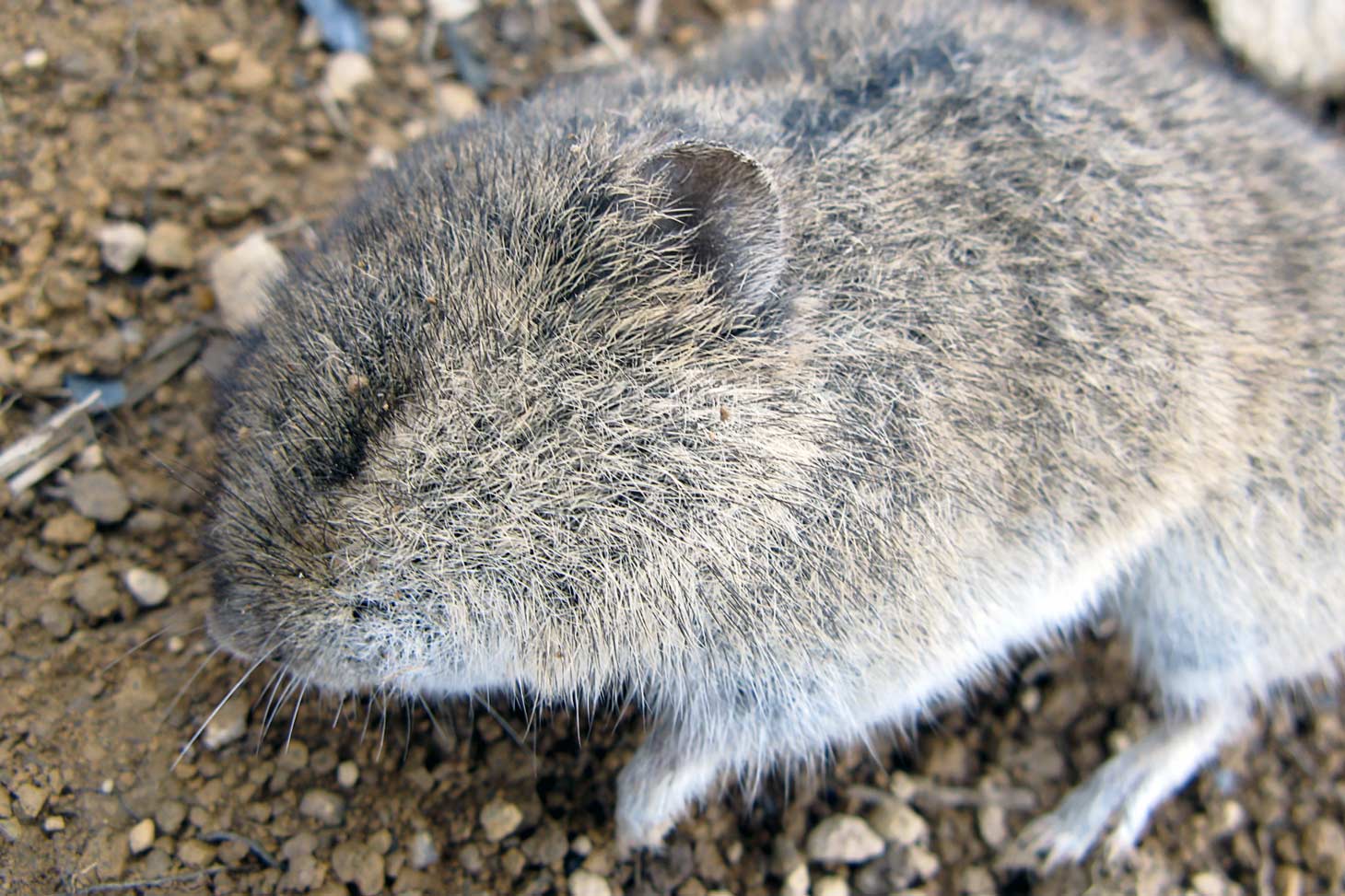
In the Lautaret sector, two species of voles pose a threat to the Botanical Garden and experimental areas:
The common vole (Microtus arvalis Pallas): naturally present in the short grasslands of the Col du Lautaret, it can also be found in sparse forests and along roadsides. It is a small rodent (8 to 12 cm long, plus a tail of 2 to 4 cm, weighing 15 to 50 g), with yellowish-brown to reddish-brown fur on its back and grayish-white fur on its belly. Its head is rounded and fairly large, and its ears are slightly hairy on the inside, short but protruding from the fur. It digs highly branched tunnels with numerous exits connected by clearly visible trails in the grass. The freshness of the signs is evidenced by cylindrical black to greenish droppings along the trails. It is primarily a herbivore that consumes grasses, shoots and roots, seeds, and bulbs, eating twice its weight in green matter per day. Sexual maturity is reached at one month, with females producing one to five litters (of one to ten young, more commonly three to six) from March to October (sometimes in winter if conditions are favorable), with a gestation period of three weeks. Lifespan is 1 to 3.5 months depending on the time of birth, but never exceeds 12 months. At the Garden, we have seen an increase in the population and damage since 2007, particularly in rock gardens with cushion plants. In 2009, at the height of the infestation, it is estimated that nearly 300 plant species were destroyed in the garden.
The common vole (Arvicola terrestris Scherman): since 1998, Arvicola terrestris has been proliferating in the meadows of the La Grave and Villar d'Arène cantons, where it causes significant damage to grazed and mowed meadows. It is a rodent measuring between 12 and 22 cm (head and body) with a tail of 6 to 11 cm, weighing between 80 and 180 g. Its coat is reddish brown on top, turning yellowish gray on the belly. Its head is rounded, with a slightly marked head-body junction, small brown eyes, and short ears. It digs its tunnels using its incisors, pushing the earth behind it with its paws and expelling it in the form of mounds (15 to 25 cm in diameter, 5 to 10 cm high). The tunnels can reach depths of up to 1 m. It is a herbivore whose daily consumption is equivalent to its weight in roots, preferably fleshy ones such as dandelions, legumes, bulbs, and rhizomes. It does not drink. Sexual maturity is reached at 2 months, with females producing 5 to 6 litters (of 2 to 8 young) from April to October, with a gestation period of 21 days. Lifespan is 6 to 8 months. The common vole is classified as a pest species (decree of July 31, 2000, Appendix B: "List of organisms against which control is mandatory under certain conditions").
Details of the rescue operation carried out in 2009 to save Jardin du Lautaret experimental areas
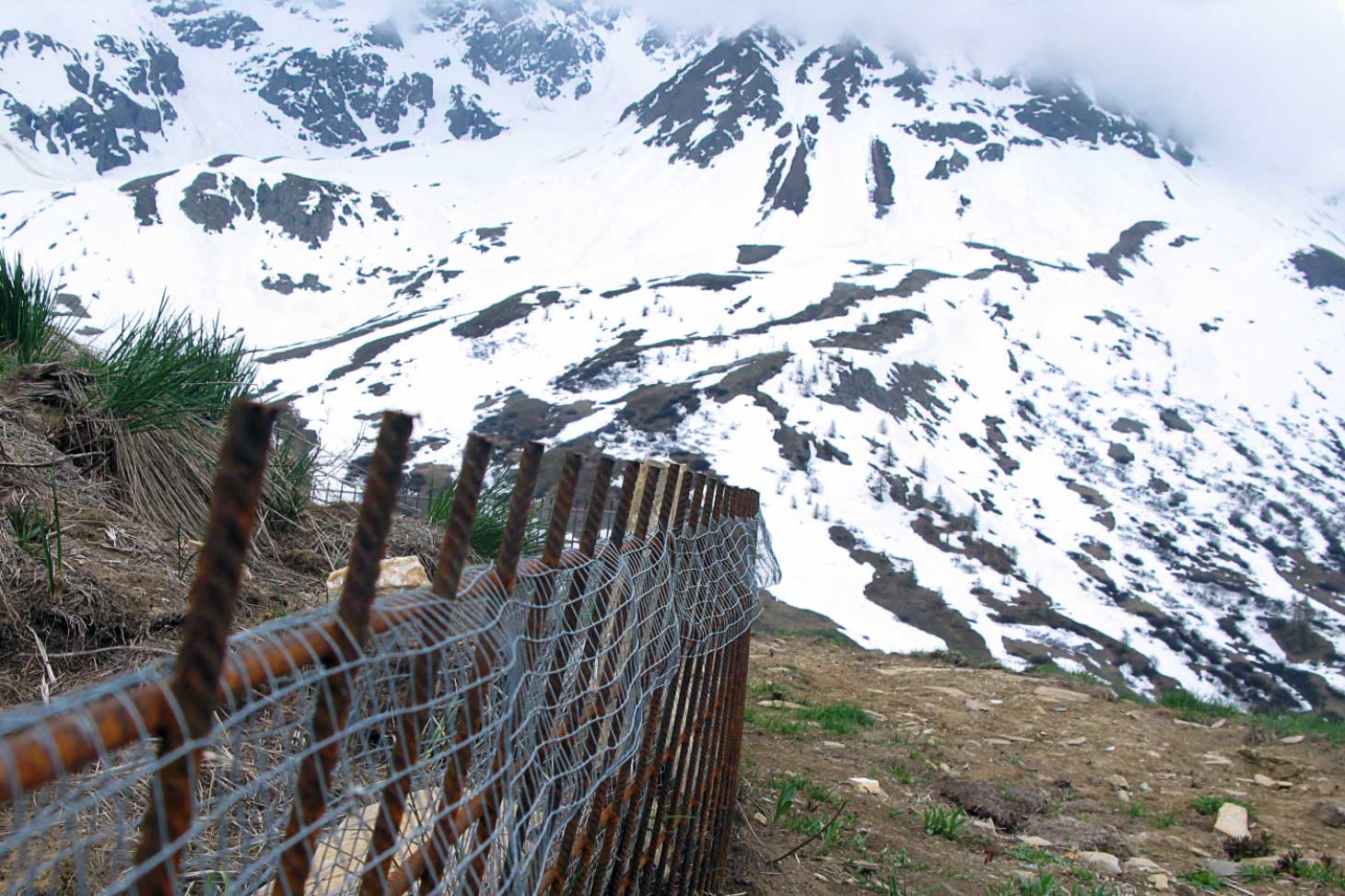
In 2009, in view of the advance of voles in the areas adjacent to the pass (Ruilles plain) and the damage caused by field voles in the garden at the end of winter, a meeting was organized with Eric Vannard (park ranger at the Ecrins National Park, responsible for the Lautaret sector) and Denis Truchetet (Franche-Comté Regional Directorate of Agriculture and Forestry). It was decided to carry out a major operation to install a protective barrier around the garden, covering a length of 900 m. This barrier is designed to prevent voles from entering the garden. A wire mesh fence was buried 40 cm deep, with 30 cm protruding above ground, reinforced with concrete reinforcement bars to withstand the weight of snow. A 10 cm flap was added to prevent voles from climbing over it. The cost of this operation is estimated at €20,000, financed by the Hautes-Alpes General Council (€7,500), the PACA Region (€3,000), Joseph Fourier University, and the CNRS. All the garden's permanent staff and interns, with the help of interns from the Alpine Ecology Laboratory (LECA) at the University of Grenoble, worked a total of around 80 man-days to install this barrier during July 2009. At the same time, "chute" traps (photo) were installed around this barrier to carry out an intensive trapping campaign. INRA-type traps were also installed in the garden. A map of the presence of the common vole was also drawn up in the Col du Lautaret area. In September, a fumigation campaign was carried out in the most affected areas of the garden.
Situation in summer 2010
Despite a fairly snowy and long winter, the fence suffered no damage and remained virtually unchanged. As soon as the permanent staff arrived at the garden (at the end of May), trapping resumed. In June and July, the presence of a BTS Management and Nature Protection intern (Germain Macabiés) enabled intensive monitoring and trapping to be carried out around the barrier in the garden, as well as continuing to map the presence of the common vole in the Col du Lautaret area. A scientific protocol for monitoring the effectiveness of the barrier was also put in place, in partnership with Patrick Giroudoux (University of Franche-Comté). Until now, no experiment on this scale (900 m of barrier) had been carried out. As for the voles, they are not very numerous at the moment. The field vole is not very active and the vole population has not yet (August 2010) exploded around the garden, even though its presence in the surrounding plains has increased.
Published on November 6, 2024
Updated on November 12, 2024
Share the linkCopyCopiedClose modal windowShare this page's URLI recommend this page:Available at this address:The page will then be accessible from your "My Favorites" menu.Stop the videoPlay the videoMutePlay soundChat: Any questions?Chatbot Robo FabricaMatomo traffic statisticsX (formerly Twitter)