 Discovery and science
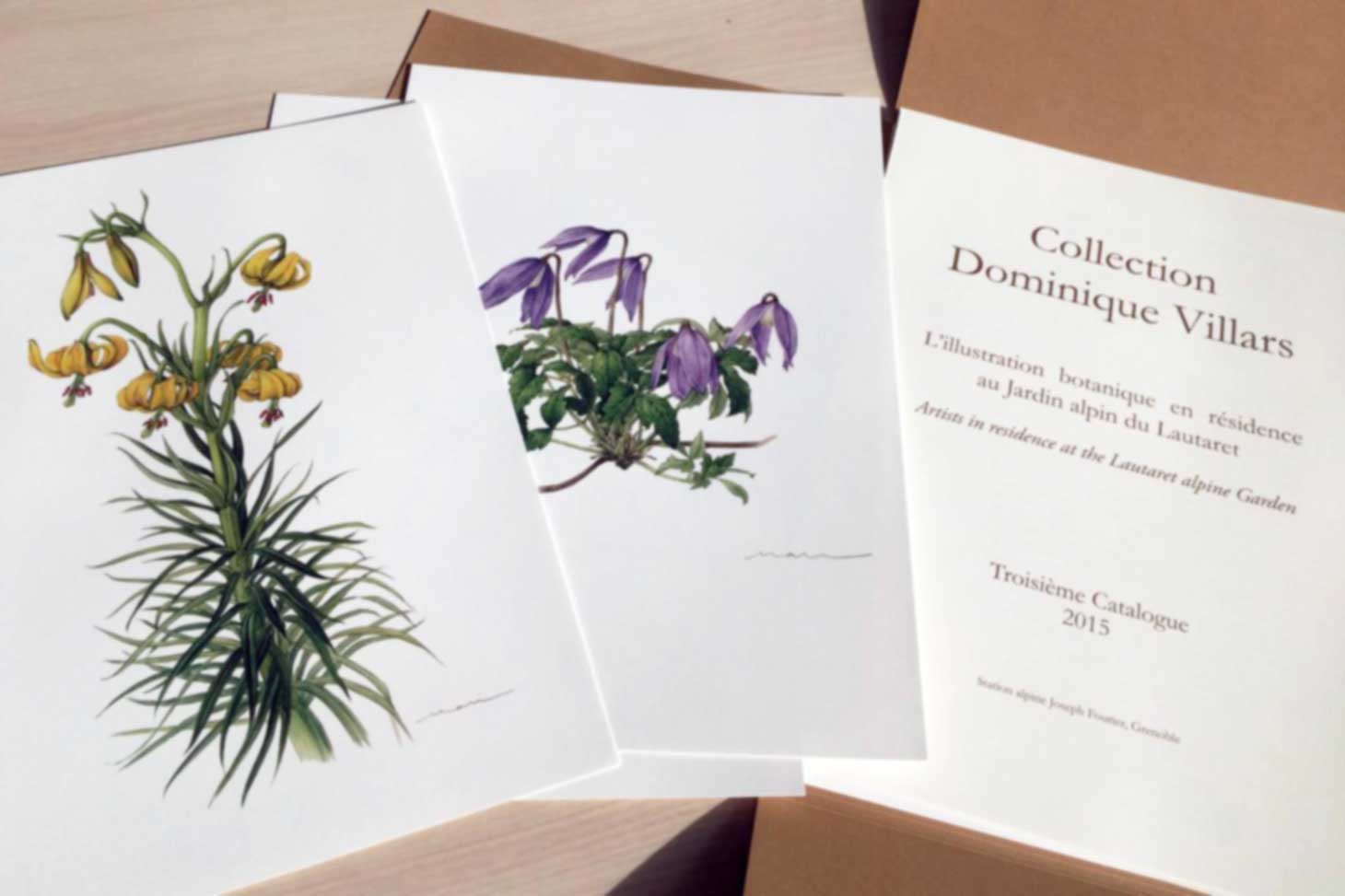
The preface to the catalog was written by Luc Garraud, botanist at the National Alpine Botanical Conservatory in Gap Charance. You will also find a biography of Dominique Villars as well as those of all the illustrators who participated in the project.
Illustrators who contributed to the third catalog of the Dominique Villars collection:
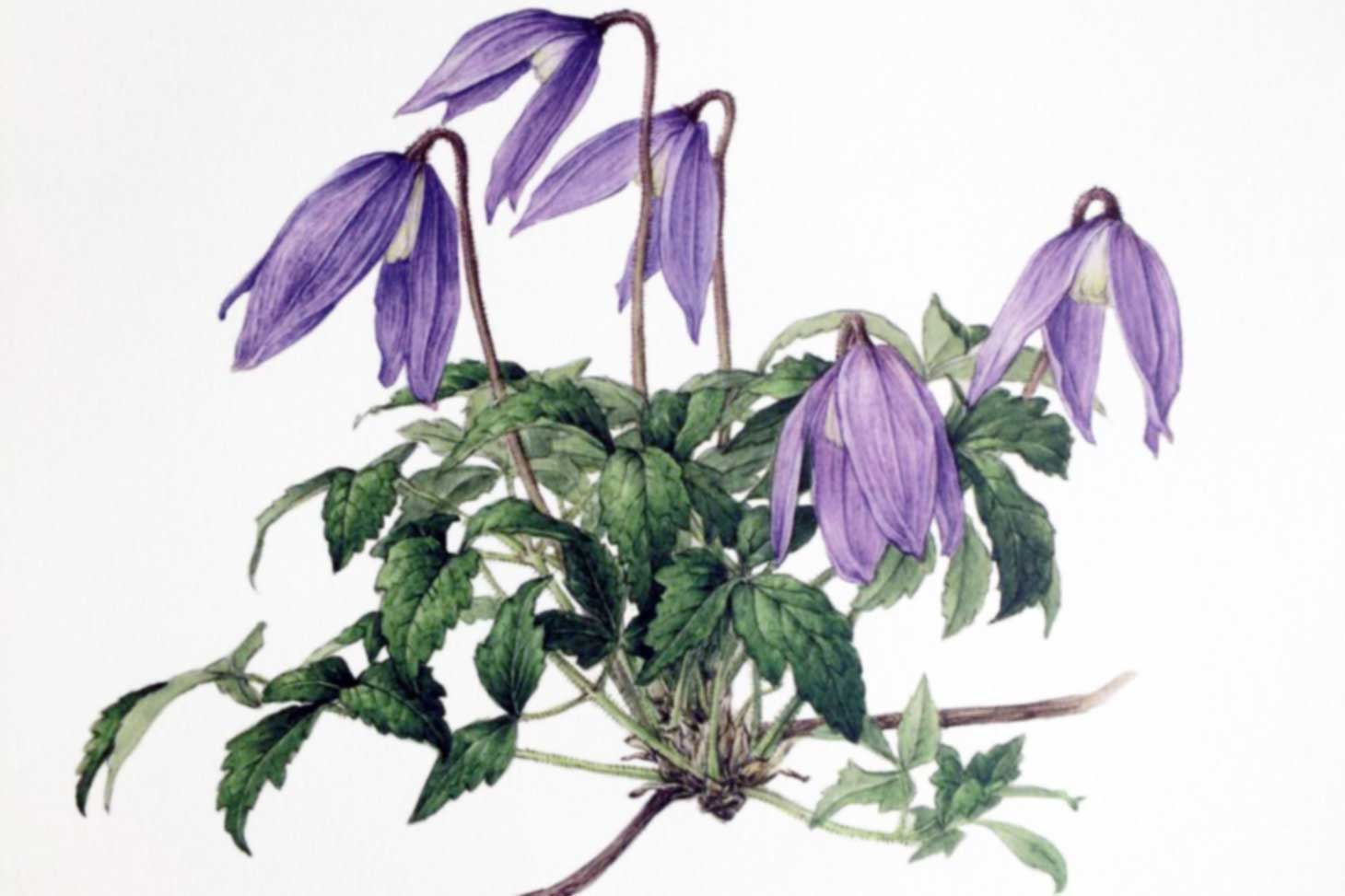
Mariko Nishimoto was born in Japan in 1955, where she lives in Okayama. A graduate of Kobe University and member of the Japanese Association of Botanical Illustration, she currently works as an illustrator. She uses pencil and watercolor techniques, contributing to the illustration of various works such as a botanical illustration manual (2005) and a book on Japanese sedges, Illustrated Sedges of Japan (2011). She has also held numerous exhibitions and participated in several competitions, receiving an award at the Hunt Institute's 12th International Exhibition of Botanical Art & Illustrations in 2007.
Alois Wilfling was born and lives in Austria. After completing his higher education in biology and ecology at Karl-Franzens University in Graz, he worked as director of the private OIKOS Institute (Institute for Ecology and Applied Fundamental Research). In addition to his work in environmental conservation and pomology, he is an expert in environmental law. He has also studied botanical drawing in several European countries and obtained a certificate in botanical illustration from the Royal Botanic Gardens, Kew, in England. He produces scientific publications, teaches drawing classes, and participates in exhibitions. His preferred technique for scientific drawing is ink, using a technique known as extremely precise pointillism, but he also likes to use watercolors. He is currently working on setting up a network of botanical illustrators.
Anne-Marie Tropet was born in 1964 and lives in Voreppe (Isère). While continuing her training at the SORNAS School of Technical and Artistic Drawing (Paris), she decided to audit courses at the Beaux-Arts in Paris. Based in Grenoble since the late 1980s, she has worked in archaeological drawing and screen printing, and now teaches drawing, watercolor, and oil painting. She participates in exhibitions and has illustrated various books, including Conter aux adolescents (Edisud, 2005) and Conter pour les petits (Edisud, 2003). Her preferred techniques are watercolor, Indian ink, and sometimes colored pencils.
Klei Sousa He lives in Campinas in the state of São Paulo, Brazil, where he was born in 1979. After studying biology, he turned to botanical illustration, which he now does for a living. He has participated in numerous competitions, winning first prizes such as the Margaret Mee Award in Brazil (2006), the Latin American Botanical Congress (2010), and the Margaret Flockton Award in Australia (2009 and 2012). He uses only pencil and ink, sometimes graphite, in a technique known as pointillism.
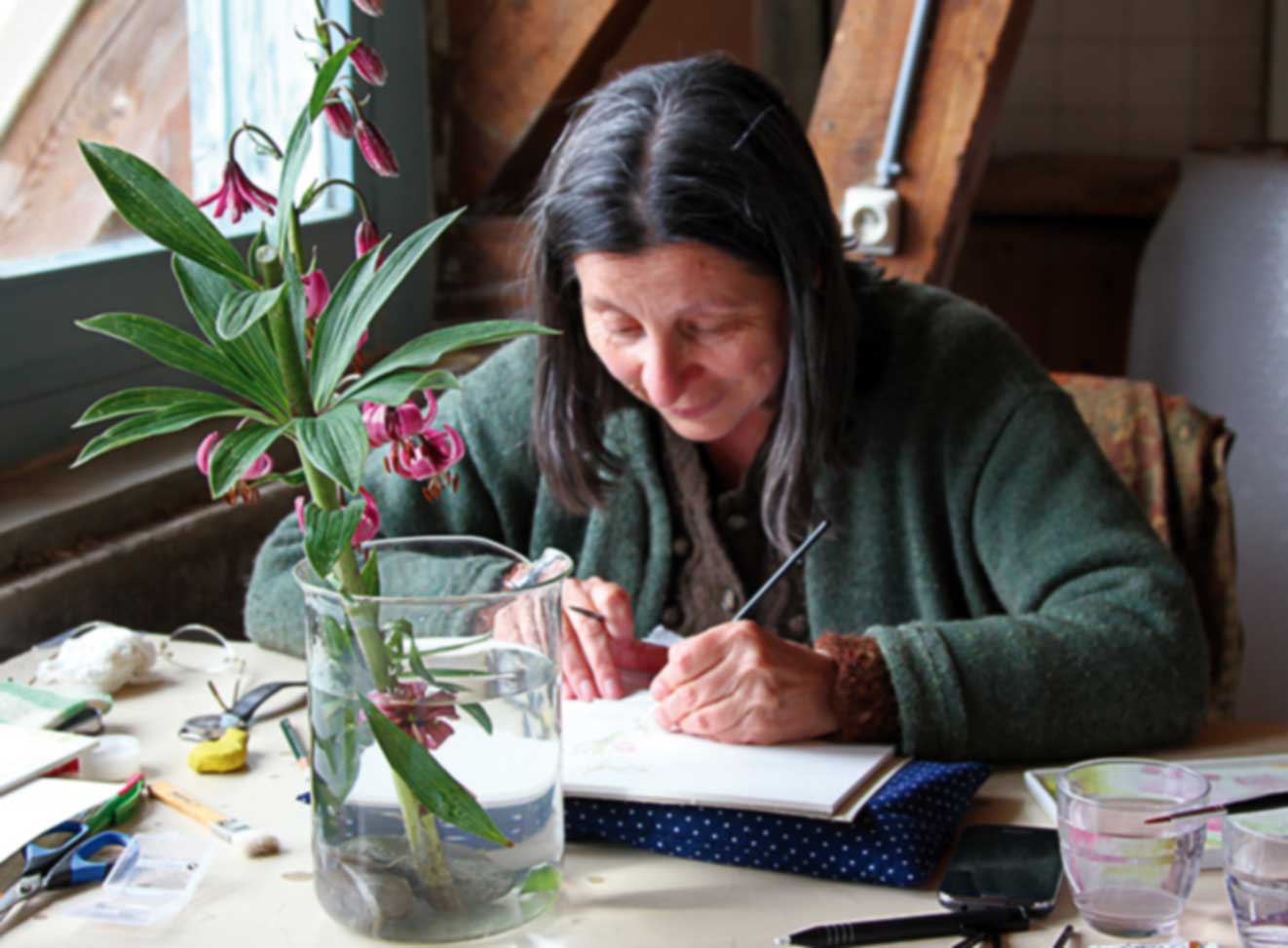
Evelin Sum-Preibisch was born in 1958 in Hausach, Germany, in the southern Black Forest. She lives in Stegen in the state of Baden-Württemberg. After studying biology, she discovered botanical illustration in England and took distance learning courses from the Society of Botanical Artists. She currently works as a freelance artist, drawing and teaching the art of botanical painting. She participates in exhibitions, such as at Westminster Central Hall (2010), the Freiburg Botanical Garden (2014), and the Château de Malmaison (2014) with the French Society of Botanical Illustrators, of which she is a member. Her preferred techniques are watercolor on paper and egg tempera on wood.
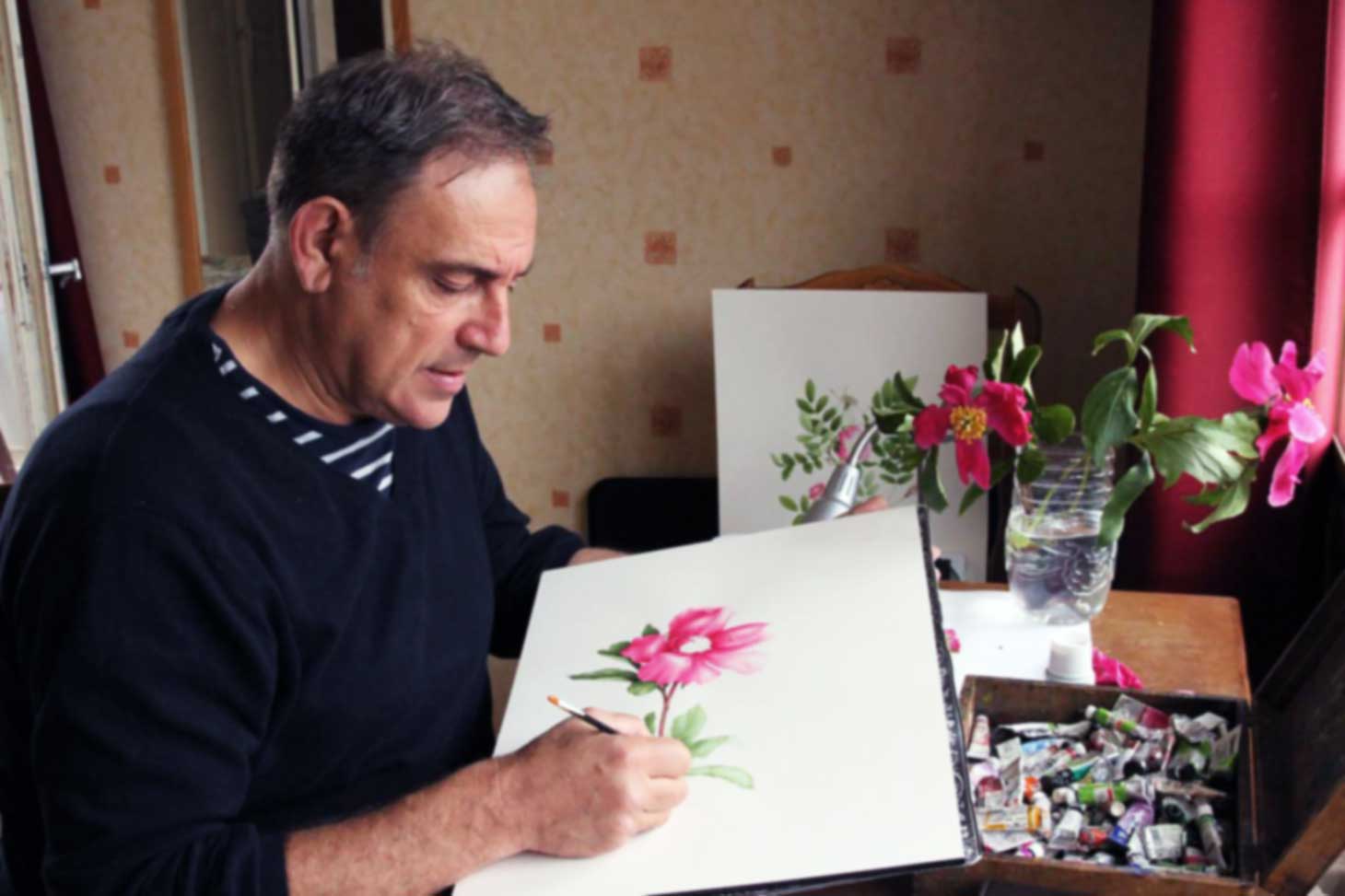
Vincent Jeannerot was born in France in 1961 and lives in Lyon. After obtaining a bachelor's degree in fine arts, he continued his studies at the École des Beaux-Arts in Lyon. He currently works as a painter and illustrator, teaching classes and running his own gallery. He uses watercolor techniques and contributes to numerous magazines (Alpes Magazine; Forêts Magazine; Les 4 saisons du Jardin; Terre Sauvage; Ma Maison, Mon Jardin) and books: Mes saisons gourmandes (ed. l'Archipel, 2007), Les plantes aromatiques (ed. Ulmer, 2008). He has also exhibited his watercolors at events such as the Courson and St Jean de Beauregard plant shows, L'art du Jardin (Paris), the Chelsea Flower Show (London), and more recently at the Royal Botanic Gardens in Melbourne (Australia). Author of Portraits de fleurs pour le dessin et l’aquarelle (ed. Ouest-France, 2008), he is currently working on a book about roses for Editions Libel.