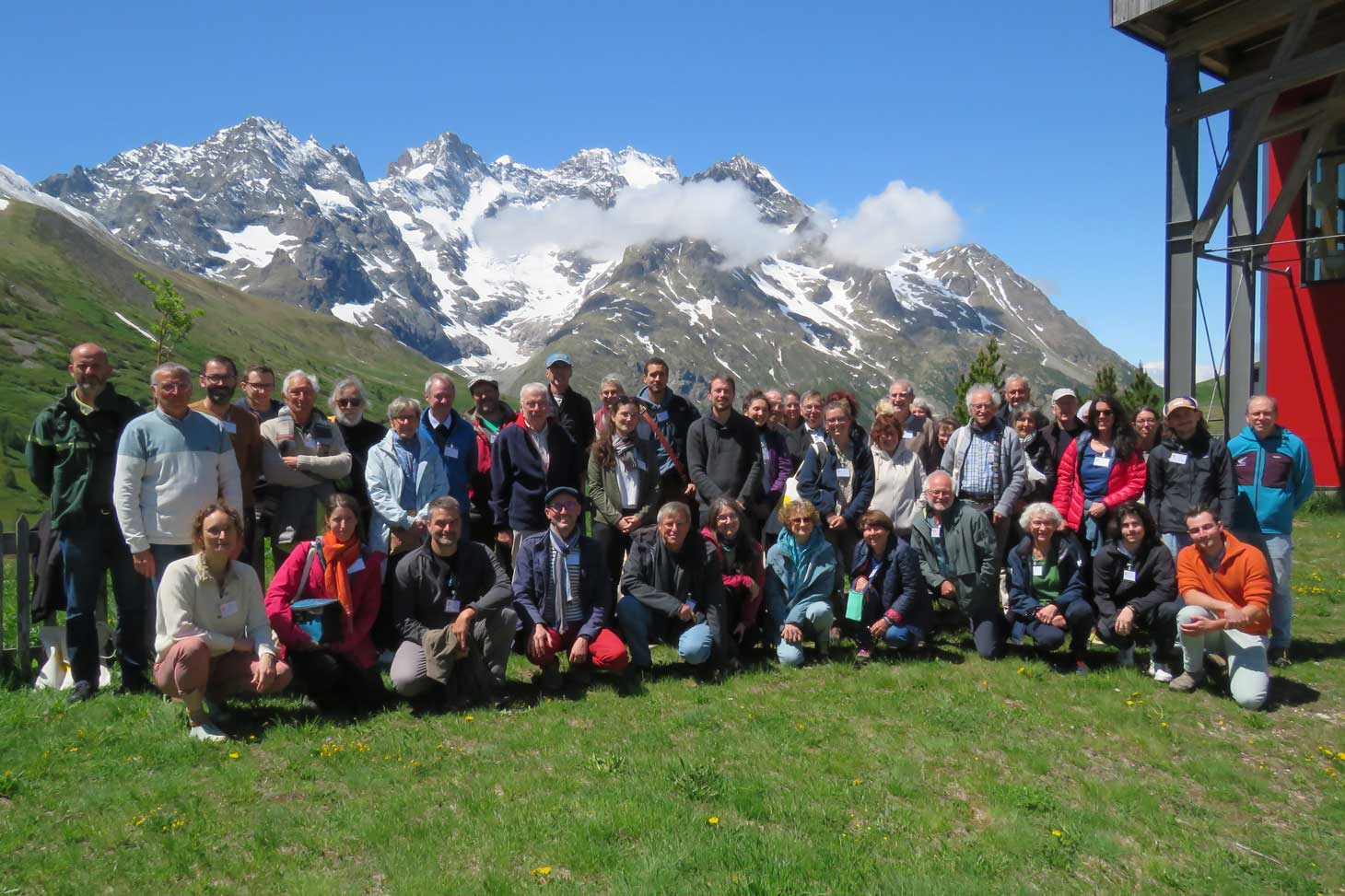
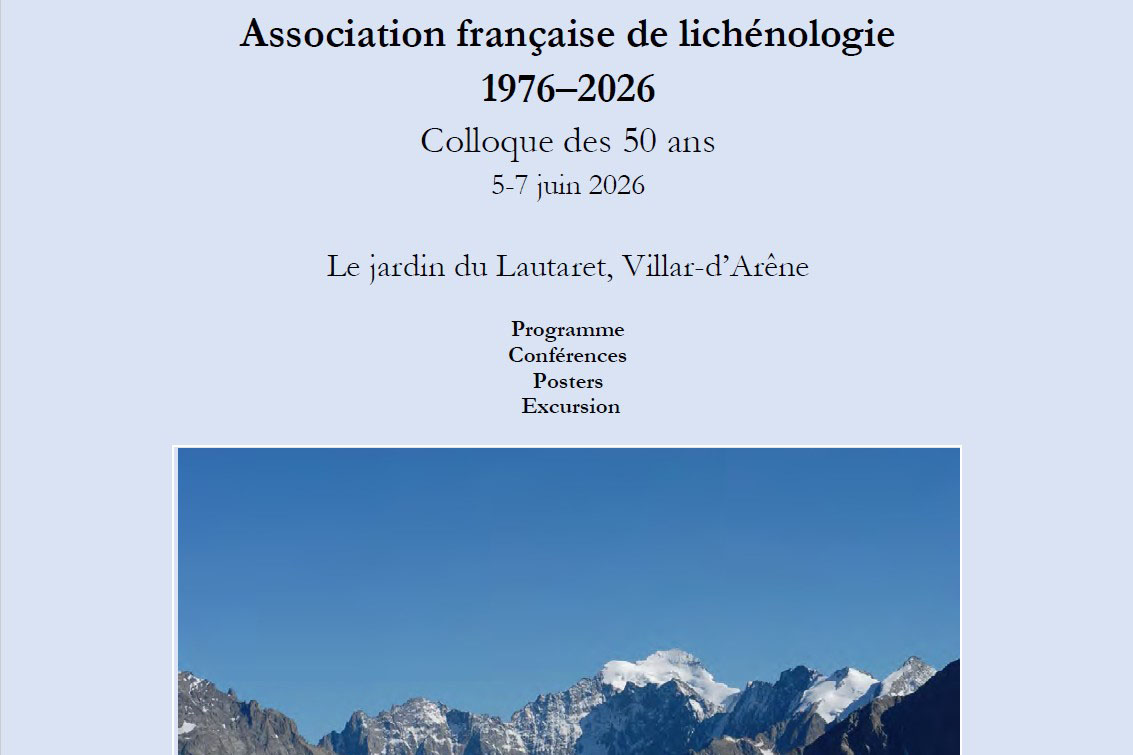
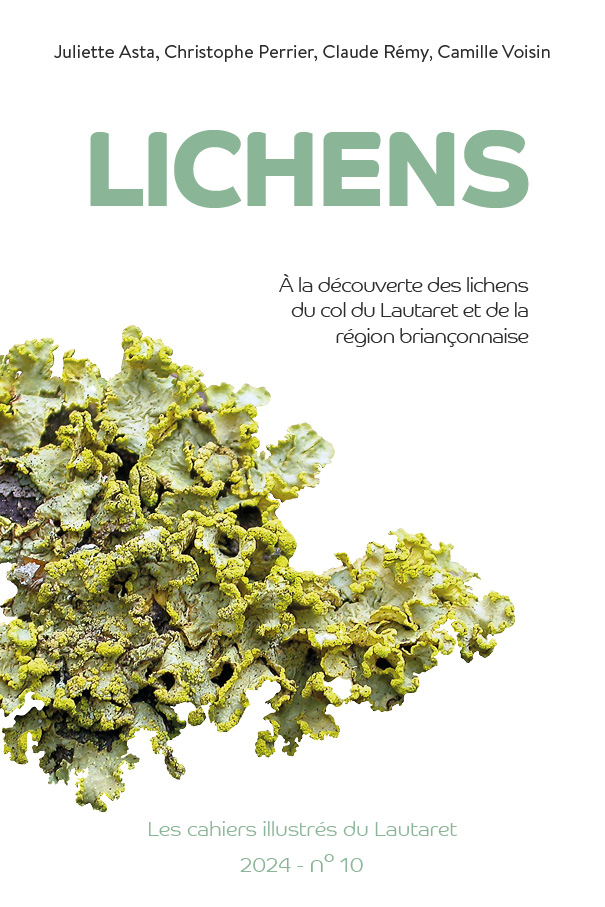
From June 5 to 7, 2026, The jardin du Lautaret hosted the 50th-anniversary symposium of the French Lichenological Association (AFL). Three days dedicated to the fascinating organisms known as lichens.
Founded in 1976 on the initiative of Marie-Agnès Letrouit, the French Lichenological Association is celebrating its 50th anniversary this year. Starting with 46 members at its founding, it now has nearly 300 members across 12 countries and plays a major role in advancing and sharing knowledge about lichens in France.
An anniversary celebrated at a historic site in Alpine lichenology
The choice of the Lautaret Garden as the venue for this anniversary is no coincidence. Since the 1950s, the surrounding mountains have been a prime location for the study of alpine flora and lichens. The work of Lucie Kofler, Georges Clauzade, Yves Rondon, and Juliette Asta, in particular, has helped make Lautaret and the Briançonnais region important centers for alpine lichenology. The Garden also maintains several herbariums that bear witness to this history.
Three days of lectures, discussions, and fieldwork
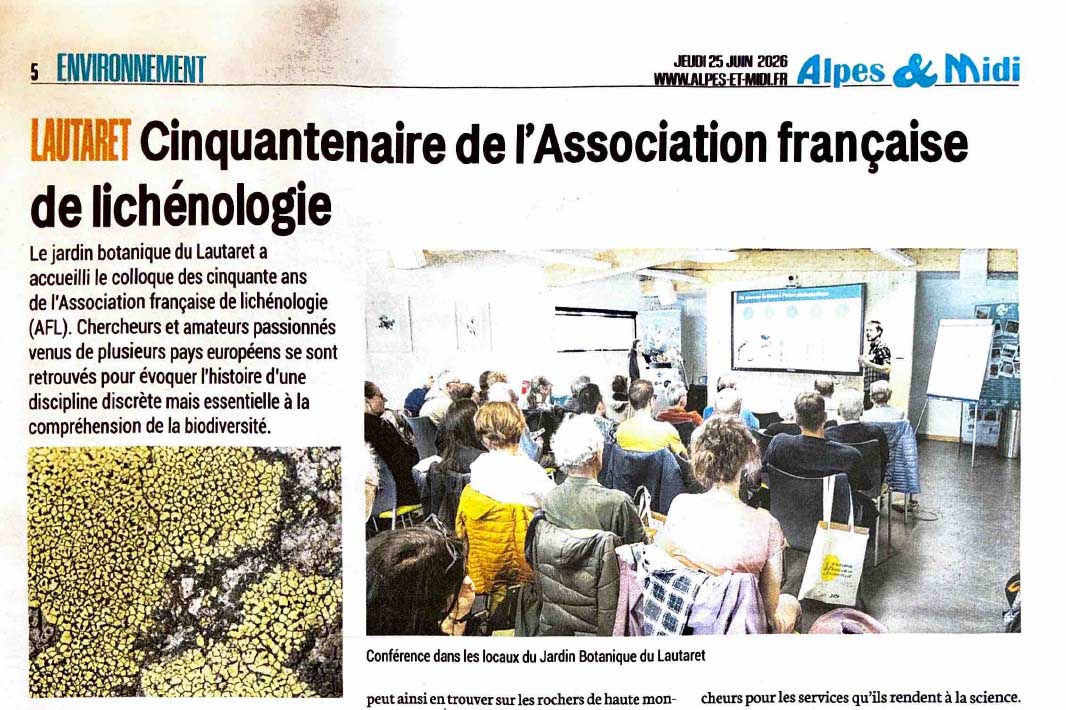
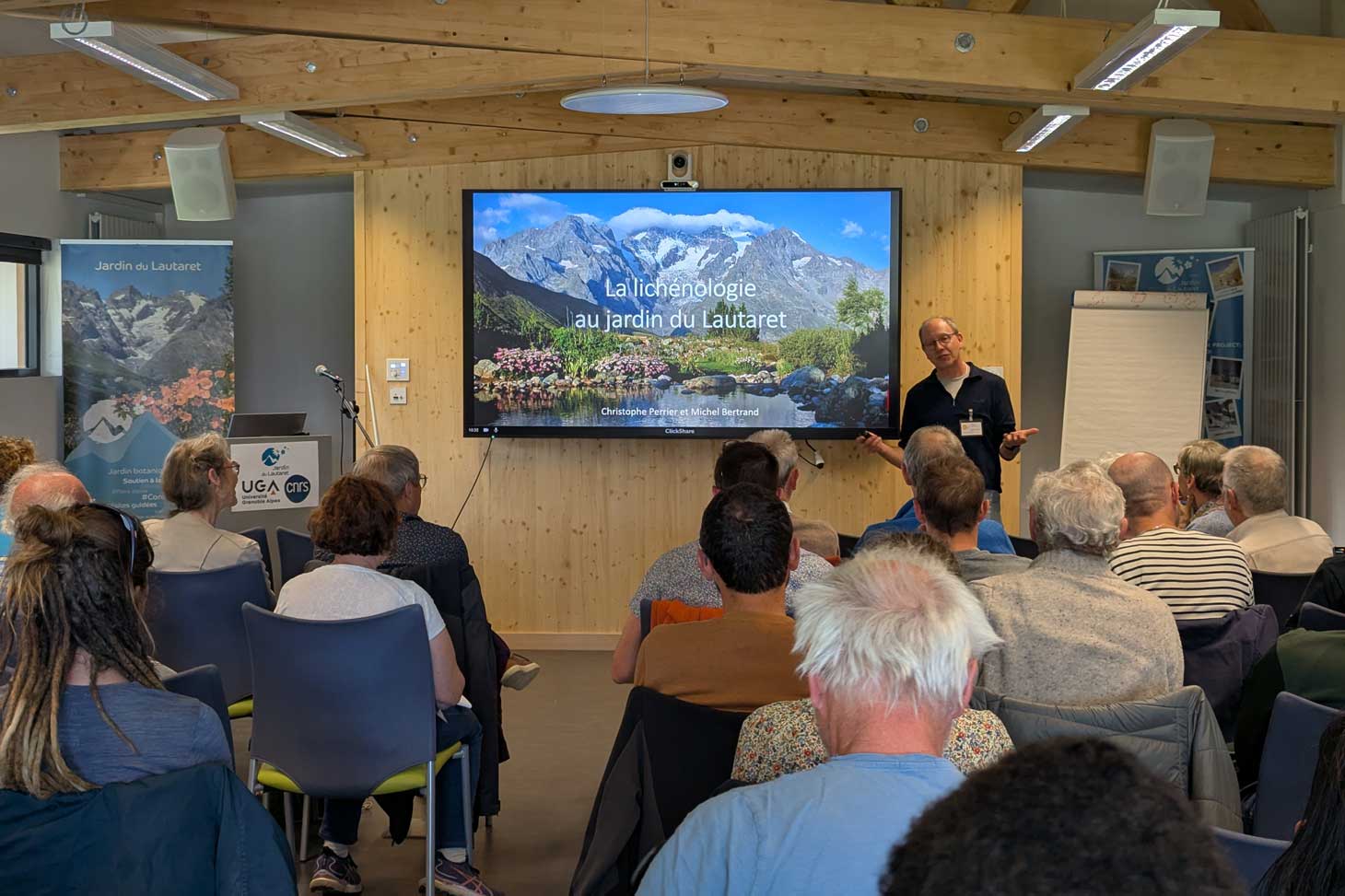
Over the course of these three days, participants attended numerous presentations on current research in lichenology, including species coexistence, taxonomy and phylogeny, lichen chemistry, biodiversity in the Briançon region, air quality, species conservation, and the role of lichens in understanding the history of snowfall in the mountains.
Significant attention was also given to new approaches and the next generation of lichenologists. Discussions focused in particular on the use of molecular tools to better understand species diversity, on citizen science programs such as Lichens GO, and on prospects for the protection of rare and threatened species.
The program also provided an opportunity to learn about the work of numerous groups and organizations active throughout France, thanks to a poster exhibition showcasing inventories, research, educational initiatives, and conservation projects.
In the Footsteps of the Lautaret Lichenologists
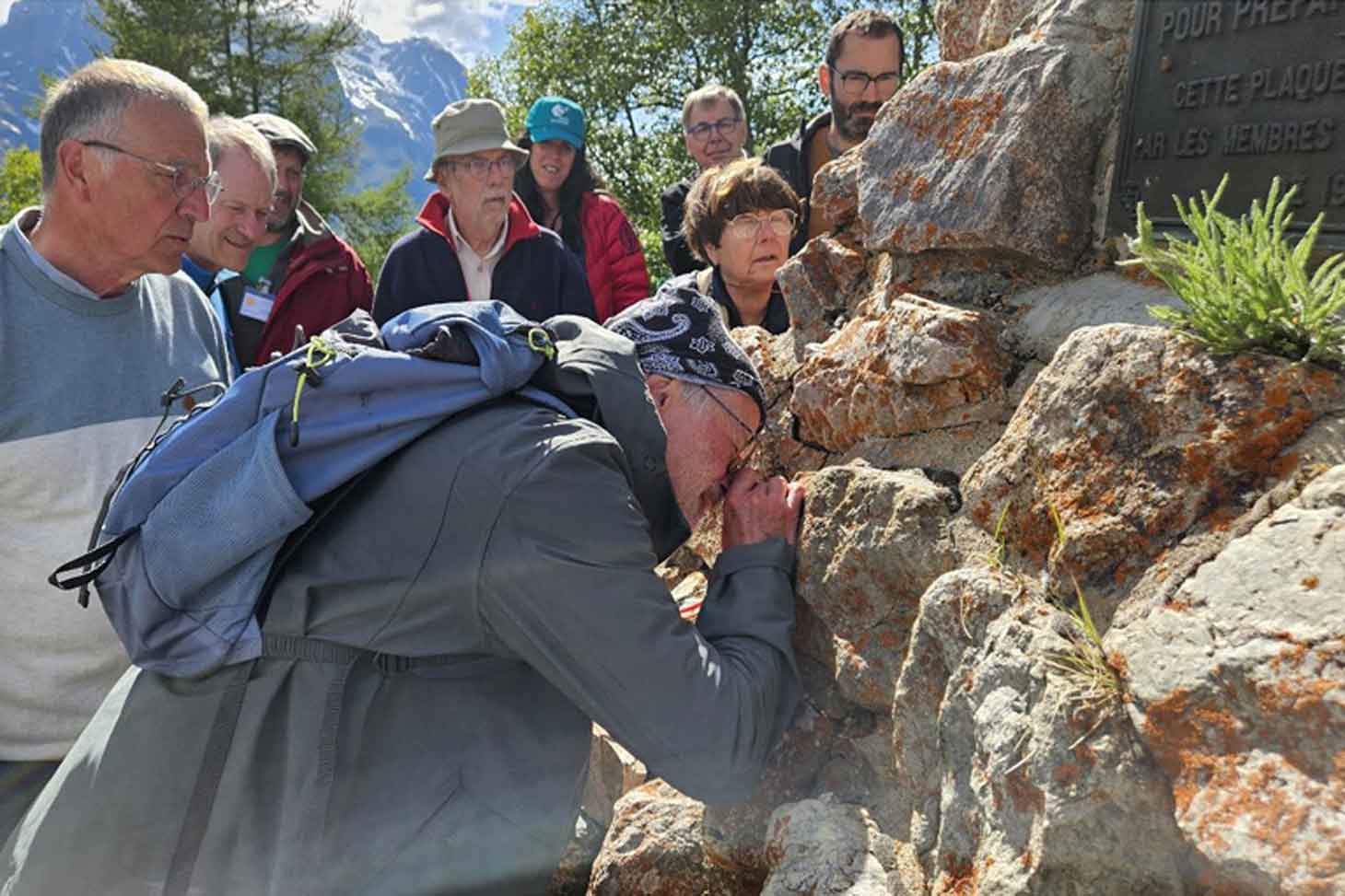
The highlight of Saturday was the field trip offered to participants, following in the footsteps of Georges Clauzade and Yves Rondon to observe the diversity of lichens in the Galibier area.
The geological diversity of the area (schist, limestone, quartzite, cargneul, and sandstone) provides a wide variety of substrates and ecological conditions conducive to a diverse lichen flora.
A Living Scientific Heritage
Beyond celebrating an anniversary and paying tribute to Juliette Asta and Sébastien Ibanez, this symposium served as a reminder of just how valuable lichens are as indicators of changes in our environments: they serve as bioindicators of air quality, play a key role in alpine ecosystems, and are subjects of study for understanding the effects of environmental change.
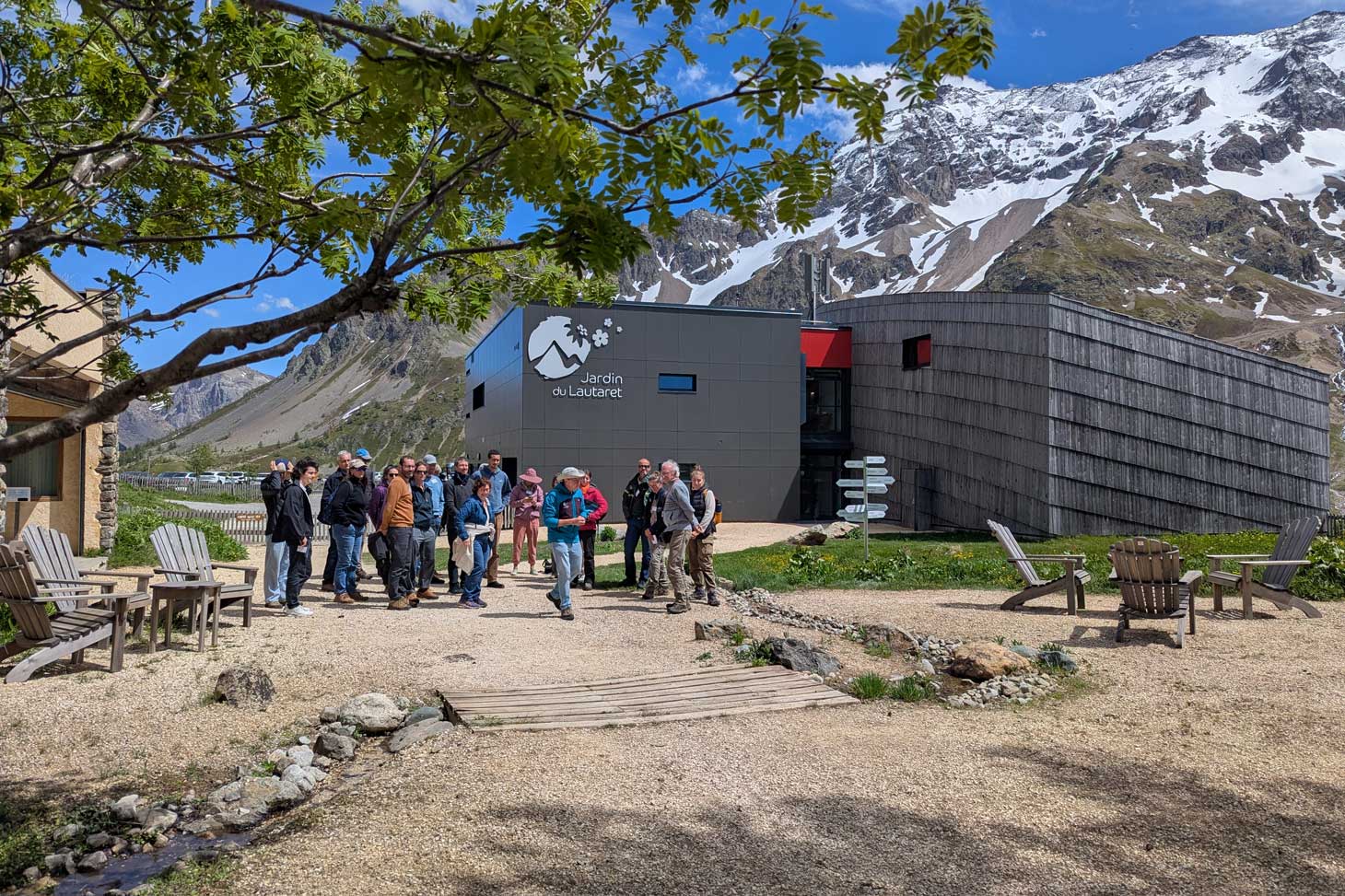
The symposium thus fostered a dialogue between the history of lichenology and its future prospects: new identification methods, genetics, citizen science, biodiversity conservation, and monitoring of environmental changes.
By hosting the 50th anniversary of the French Lichenological Association, “ The jardin du Lautaret ” has thus reconnected with a long scientific history while opening its doors to research and exchanges that will help write the next chapters of Alpine lichenology.

 Discovery and science