
 Discovery and science
How many drivers have struggled to cross the Lautaret Pass, swept by icy winds and heavy snow, especially this winter?
In these conditions, it is difficult to imagine The jardin du Lautaret a source of hot water that, like an oasis in the desert, creates a microclimate and maintains abundant vegetation in the midst of glaciers!
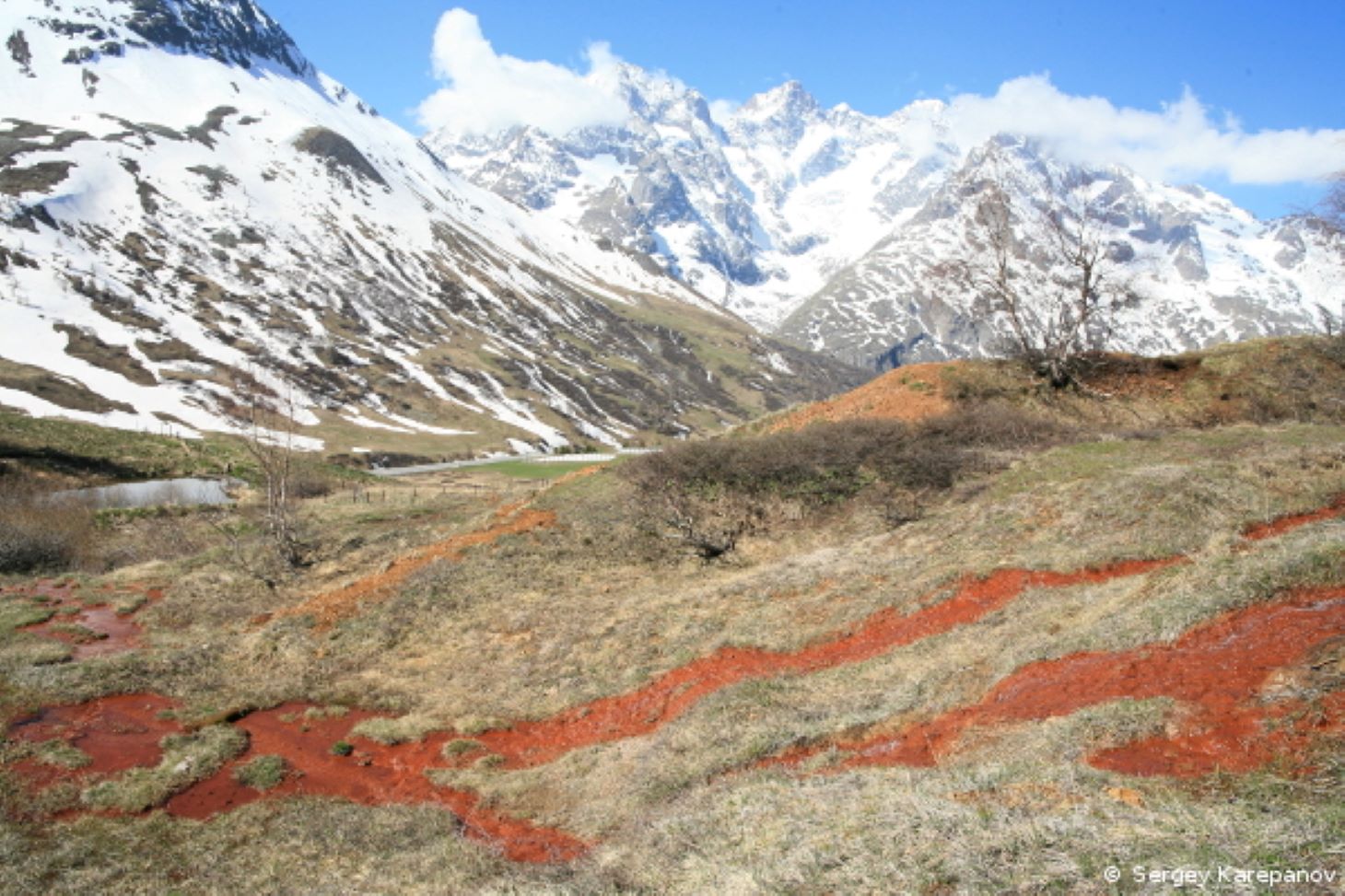
Yet this is what research carried out in the Natura 2000-listed tuff field of the Jardin du Lautaret has revealed. This surprising discovery challenges what we thought we knew about the fate of vegetation during the ice age in the Alps, just over 11,000 years ago. Yes, at a time when our valleys were covered by glaciers that extended as far as the city of Lyon, vegetation was able to find refuge in places that had previously been unsuspected...
This is why this research has been published in the highly respected international scientific journal Global Change Biology and is being reported in a national press release by the CNRS. Serge Aubert, former director of the Jardin du Lautaret from the early 2000s until 2015, actively participated in this research.
Following the Alpages volants experiment launched in fall 2016 (involving the transport by helicopter of alpine meadows on the slopes of Galibier), and after the beginning of February, when dozens of researchers from around the world came to work at the Garden to learn how to study snow as part of a European school organized by Météo France, The jardin du Lautaret reminds The jardin du Lautaret that it is much more than a garden where you can come and discover the flora of the world's mountains in summer or enjoy free lectures. It is a place where researchers from all over the world come to work, to make discoveries and help us understand the world we live in.
This study was conducted by Christopher Carcaillet, a researcher at the École Pratique des Hautes Études in Lyon, Serge Aubert, then a professor atUniversité Grenoble Alpes, and Jean-Louis Latil, a man passionate about this place steeped in more than 15,000 years of history. Overall, the study is the result of a cross-disciplinary collaboration between researchers from the École Pratique des Hautes Études (EPHE-PSL University), the University of Grenoble Alpes, the University of Quebec in Montreal (UQAM), the University of Montpellier, and the CNRS. In France, this work involves researchers from the Laboratory of Ecology of Anthropized Natural Hydrosystems (CNRS/Claude Bernard Lyon 1 University/ENTPE), the Alpine Ecology Laboratory (CNRS/University of Savoie Mont Blanc/Université Grenoble Alpes), the Mediterranean Institute of Marine and Continental Biodiversity and Ecology (CNRS/IRD/Aix-Marseille University/University of Avignon Pays de Vaucluse), and the Institute of Evolutionary Sciences in Montpellier (CNRS/University of Montpellier/IRD/EPHE).
Finally, this study was made possible thanks to the financial support of all the supervisory authorities, as well as that of the Zone Atelier Alpes, the AnaEE (Analyses et expérimentations sur les écosystèmes ANR-11-INBS-0001AnaEE- Services) investment program for the future, the Écrins National Park, and finally the Department of Agriculture of the Hautes-Alpes department.
Photo: The travertine tuff deposit in the Lautaret garden was used for this research. It contains numerous fossilized plants and animals.