 Discovery and science
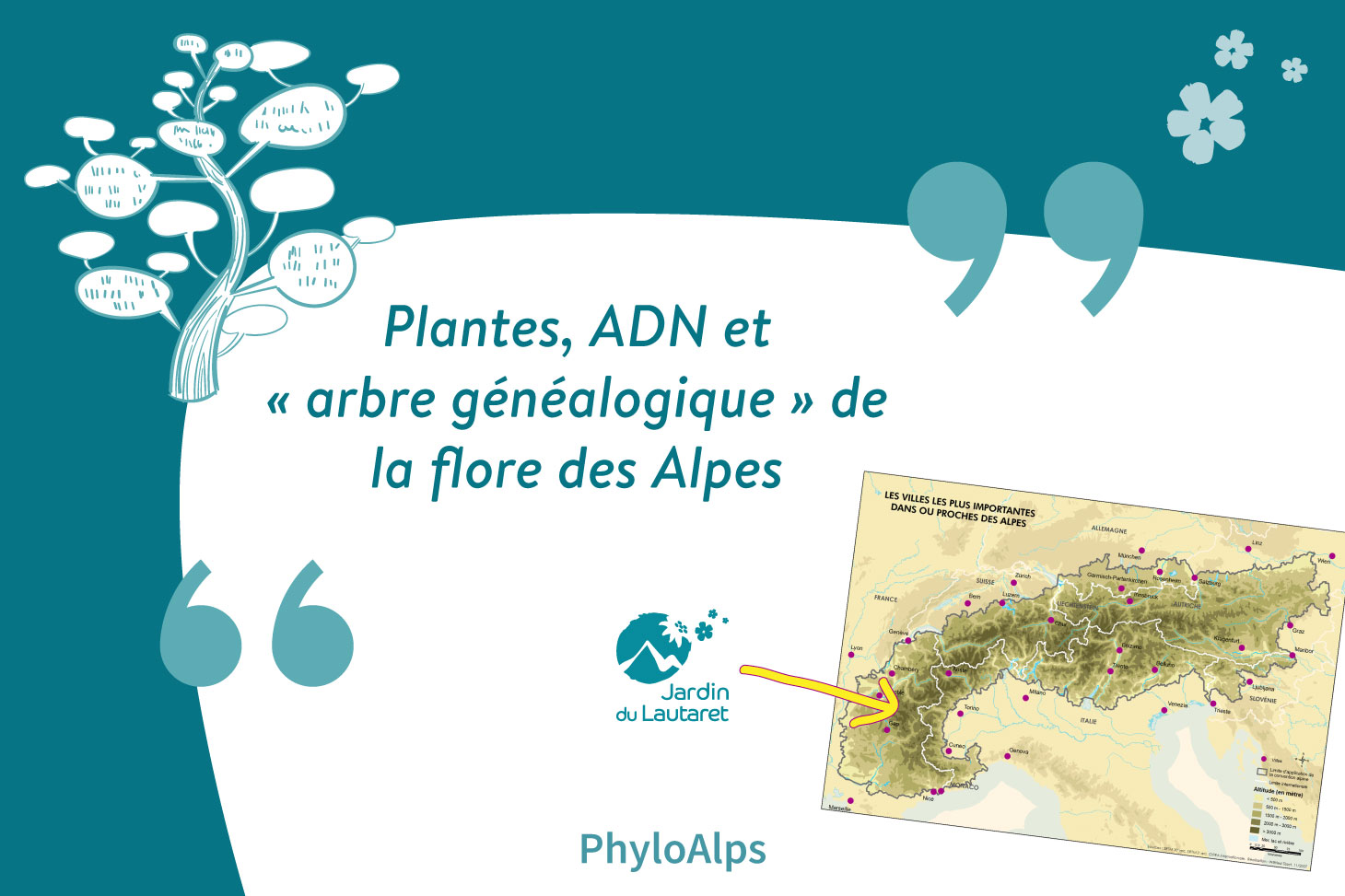
Thanks to initial sampling carried out with Pierre Taberlet, a pioneer in environmental barcoding (a method of identifying species via their DNA left in the environment), a question arose:
What if we sequenced the DNA of all the flora in the Alpine Arc to understand how it became established there and how it has evolved over time?
In 2010, an army of botanists from France, Switzerland, Germany, Austria, and Italy spread out across the 1,200 km of the Alpine Arc from east to west. The project is growing... and so are the logistical challenges.
With thousands of samples to process, it is impossible to sequence everything internally in Grenoble. Outsourcing is necessary. A first batch is sent to China... but collaboration is difficult. France Génomique launched a call for projects to fund mass sequencing approaches to biodiversity. A partnership was set up with the French Genoscope, and the PhyloAlps project was accepted in 2013. The first sequencing trials began in 2014, with most of the work taking place between 2015 and 2020.
From DNA to usable data
Once sequencing is complete, these millions of DNA fragments must be transformed into usable data. At the Alpine Ecology Laboratory, months and years of meticulous work begin to organize and analyze the sequences so that species can be compared with each other. The first scientific publications were released in 2016.
Because scientists are conscientious people, each DNA sample is accompanied by a herbarium specimen, proving the identity of the samples. The result of hours and hours of work in the Lautaret garden: 5,000 specimens, carefully preserved in our herbarium (acronym GR). A physical herbarium is essential for research, which is good. A digital herbarium, accessible to all, is even better.
By 2018, digitizing samples had become a necessity. In 2022, we finally obtained a budget to purchase the necessary equipment. But then... Without our knowledge, the supplier sold us a defective machine that had already been returned to customer service by its previous owner... We bounced back in 2024 by approaching Inist, which embarked on R&D to develop a suitable solution. The garden team has just returned from Vandœuvre-lès-Nancy to bring the herbarium boxes back to Grenoble.
Next step: publication on e-ReColNat, the major project to digitize French natural history collections, led by the National Museum of Natural History.
For those interested, two papers have already been published in Nature. One has just been accepted and another is awaiting validation. Not to mention the rest of the publications from the PhyloAlps consortium.