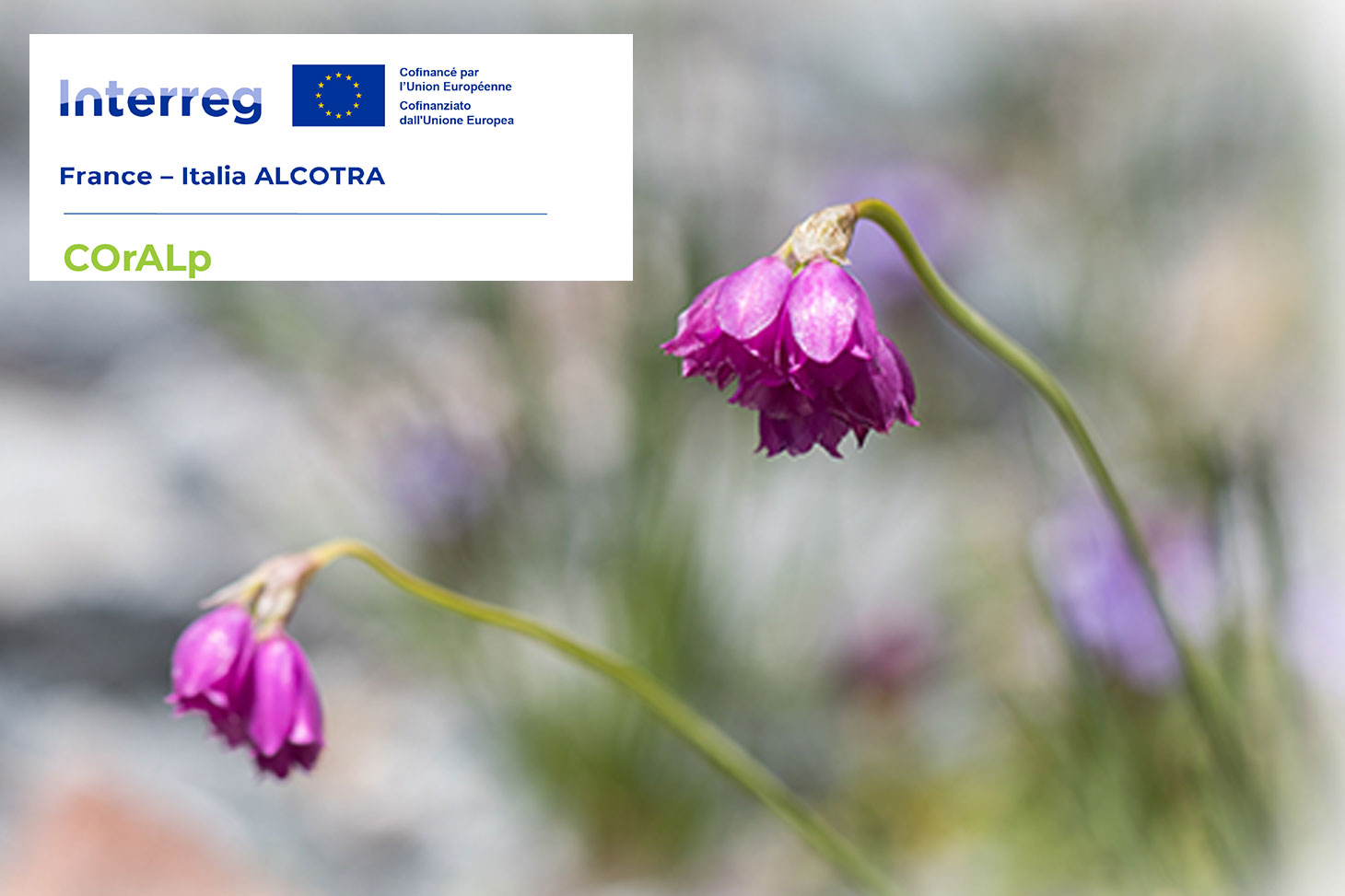
The jardin du Lautaret the COrAlp project, a three-year European cross-border cooperation program between France and Italy focusing on edible and ornamental plants found in the wild flora of the Latin Alps. Investing in the protection and promotion of biodiversity to improve the connection between cities and mountains.
COrALp is a project implemented as part of the
France–Italy ALCOTRA Program (Latin Alps Cross-Border Cooperation), with the aim of responding to environmental challenges and strengthening integrated and inclusive local cooperation. The Latin Alps are home to remarkable plant biodiversity, resulting from the convergence of Alpine and Mediterranean elements and the presence of wild species with food, ornamental, medicinal, and aromatic potential that have not yet been sufficiently studied. However, this natural capital is increasingly exposed to converging pressures, including climate change, the abandonment of traditional practices such as high-altitude grazing, high-impact agricultural practices, soil erosion, and ecological and landscape degradation.
In a cross-border context marked by significant geographical, social, linguistic, and economic heterogeneity, these dynamics reduce the resilience of ecosystems and local communities and accentuate disparities between rural and urban areas, making it necessary to share an understanding of the threats and strengthen technical and scientific cooperation.
In this context, COrALp bases its action on cooperation between Italy and France in order to define common, shared, long-term strategies for the protection of fragile natural heritage, integrating the production of scientific knowledge and the promotion of traditional knowledge relating to the properties and uses of wild plants.
This approach guides local communities toward active protection and links biodiversity conservation to sustainable practices, short supply chains, and sustainable and inclusive tourism, while strengthening the historical and cultural ties between plants and people.
The overall objective of COrALp is to strengthen cross-border knowledge exchange and technical-scientific cooperation in order to protect and promote wild plants with food and ornamental potential, promoting a green, sustainable, and inclusive economy and strengthening the connection between urban and mountain areas to reduce socioeconomic disparities and support the preservation of biocultural heritage.
To this end, the project is establishing a cross-border network of experts and research institutions, combining analysis of scientific literature with the identification of ecological and biological indicators useful for species selection, and promoting participatory selection processes involving local communities. This knowledge base feeds into common sustainable management tools, through the identification of collection sites, the development of shared guidelines and publications, the definition of a reference list of species of interest, and the establishment of an integrated, georeferenced cross-border database, supplemented by mapping actions to monitor habitats, distribution, and conservation status.
At the same time, COrALp is strengthening the conservation of plant biodiversity in mountainous and urban contexts through outreach events, training, and educational activities aimed at increasing awareness of the ecological, economic, and cultural value of wild plants and integrating traditional knowledge and ecological criteria into sustainable resource management.
The operational dimension includes in situ and ex situ conservation and cultivation of selected species, through seed collection and conservation, including seed banks with cryopreservation, the use of advanced propagation techniques and agronomic assessments of soil and climate requirements, as well as productive and qualitative performance, through to the analysis of bioactive metabolites in order to highlight nutraceutical, antioxidant, and dyeing properties and identify ecotypes of interest.
Urban enhancement is achieved through the cross-border development of innovative urban greening solutions based on selected and cultivated native species, with demonstration installations such as green roofs and flower beds integrated into vegetable gardens and urban developments, supported by information panels and participatory monitoring, in order to promote the adoption of nature-based solutions (NBS), improve urban biodiversity, and produce guidelines and catalogs for the design and agronomic management of resilient green spaces, with benefits for citizens' well-being and the ecological and socioeconomic quality of cross-border urban spaces.
Follow COrALp on social media:
Facebook |
LinkedIn
 Discovery and science